2026 Top Battery Backup Sump Pump Types to Buy?
A flooded basement rarely waits for a convenient moment. Heavy rain can arrive overnight, while a power outage silences a standard sump pump. That is where a battery back up sump pump becomes practical protection, especially for homes with finished basements, valuable storage, or low-lying foundations.
Mike Holmes, a widely recognized Canadian contractor and renovation expert, has warned, “A sump pump is only as reliable as the power behind it.” That advice remains relevant in 2026. A backup pump must do more than sit beside the primary unit. It should start automatically, move enough water, and operate long enough during an outage. Battery quality matters. So does the charger.
This guide examines the top battery backup sump pump types to buy in 2026. It compares compact emergency units, combination systems, high-capacity pumps, and smart models with remote alerts. Each type solves a different problem. A small pump may protect a lightly used basement. It may struggle during sustained rainfall. A combination system offers stronger coverage, but installation costs more.
Real-world details matter. Check valve failure, frozen discharge pipes, and neglected batteries can defeat an otherwise excellent setup. I have seen homeowners focus on horsepower while overlooking battery age. That is an easy mistake. The best choice depends on pit size, inflow rate, outage history, and maintenance habits. No system is perfect. Careful selection simply reduces the chance of waking to standing water.
Classify backup sump pumps by 12V, 24V, AC/DC, and water-powered systems
2026 Top Battery Backup Sump Pump Types to Buy?
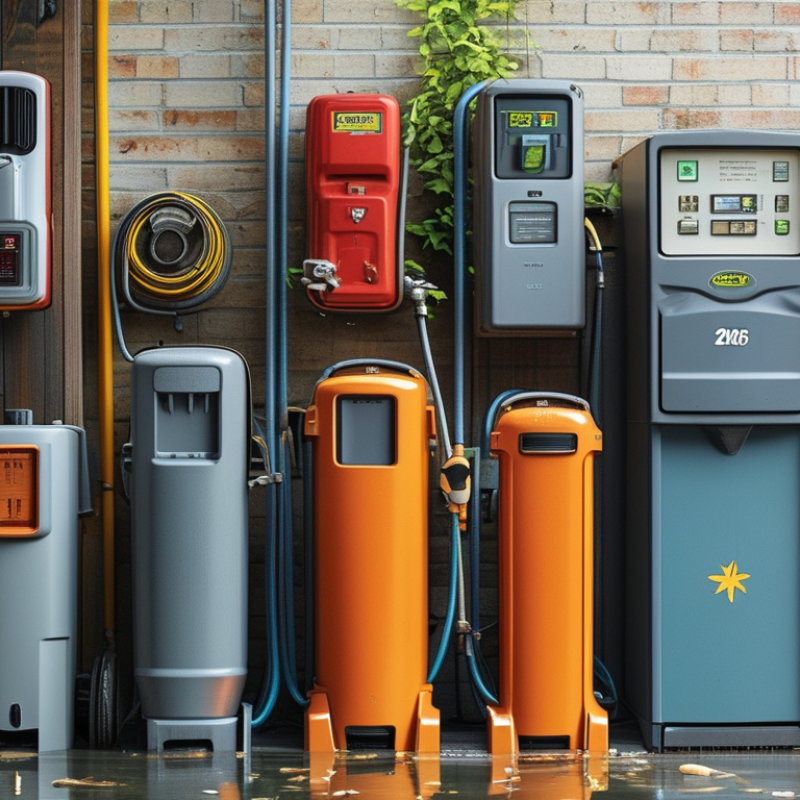
Backup sump pumps fall into four practical groups: 12V, 24V, AC/DC, and water-powered systems. A 12V pump suits smaller pits and short discharge runs. It usually pairs with a deep-cycle battery, not a standard automotive battery. The lower voltage is simple, but heavy current can reduce runtime quickly.
24V models can deliver similar pumping performance with less current through longer cables. They may suit larger basements, especially when the battery sits far from the sump pit. However, replacement batteries and chargers must match the system voltage. A mismatch can damage equipment or create an unreliable backup.
AC/DC systems offer useful flexibility. They run from household power during normal conditions, then switch to battery power during an outage. Check the transfer function, battery capacity, and alarm before buying.
Water-powered pumps avoid batteries entirely. They depend on municipal water pressure, though, and may use substantial water during long outages. They also stop working if the water supply loses pressure.
Measure the pit depth and discharge height first. Then compare the pump’s tested flow at that height, not its free-flow rating. A small test bucket can reveal weak output or a sticking float. I would not ignore noise, cable length, or discharge freezing. These details are easy to overlook. Even a strong pump becomes disappointing when its check valve leaks or its backup battery is poorly ventilated.
Compare pump capacities from 2,000–11,000 GPH across common head heights
In 2026, battery backup sump pumps are easier to compare through real head height, not advertised maximum flow. Many units claim 2,000–11,000 gallons per hour, but those figures often represent zero lift. The Hydraulic Institute’s pump-testing guidance emphasizes reading performance curves across changing system resistance. A pump rated near 11,000 GPH may deliver only 4,000–6,000 GPH at 10 feet of head. Smaller 2,000–4,000 GPH models can fall below 1,500 GPH at the same height.
Common basement discharge heights range from 8 to 12 feet. At 10 feet, a practical comparison looks like this: 2,000–4,000 GPH pumps suit modest inflow and short discharge runs; 5,000–8,000 GPH units offer more reserve; 9,000–11,000 GPH models may help during intense inflow, but only when their curves remain strong. The U.S. Department of Energy’s Pumping System Assessment Tool also treats pipe length, elbows, and diameter as key resistance factors. A narrow hose can quietly reduce output. That detail is easy to miss.
Tips: Measure vertical lift from the pump outlet to the discharge point. Add pipe length and elbow resistance. Choose a model delivering your target flow at that real height, not at zero head. Battery duration matters too. A higher-capacity pump can drain batteries faster. I would also test the backup twice yearly, because “automatic” does not mean permanently reliable.
2026 Top Battery Backup Sump Pump Types to Buy? - Compare Pump Capacities from 2,000–11,000 GPH Across Common Head Heights
| Pump type / capacity class |
Typical power system |
Discharge size |
0 ft head
GPH |
5 ft head
GPH |
10 ft head
GPH |
15 ft head
GPH |
20 ft head
GPH |
Best use |
Compact entry class
2,000–3,000 GPH |
12 V battery |
1-1/4 in |
2,800 |
2,250 |
1,650 |
900 |
350 |
Small pits and low discharge runs |
Standard DC backup class
3,000–5,000 GPH |
12 V deep-cycle battery |
1-1/2 in |
4,200 |
3,600 |
2,850 |
1,900 |
950 |
Typical residential backup protection |
High-output DC class
5,000–7,000 GPH |
12 V or 24 V battery |
1-1/2 in |
6,200 |
5,350 |
4,350 |
3,100 |
1,650 |
High water inflow and deeper basins |
Dual-pump backup system
6,000–8,000 GPH combined |
AC primary + 12 V DC backup |
1-1/2 in each |
7,500 |
6,450 |
5,200 |
3,650 |
1,850 |
Primary-pump failure and outage protection |
High-capacity 24 V class
8,000–9,500 GPH |
24 V battery bank |
2 in |
9,200 |
8,050 |
6,750 |
5,050 |
3,000 |
Large pits, long discharge lines, and severe storms |
Maximum-output battery class
10,000–11,000 GPH |
24 V high-capacity battery bank |
2 in |
10,800 |
9,650 |
8,150 |
6,250 |
4,000 |
Very high inflow or commercial-style residential systems |
Selection note: Flow decreases as vertical lift, pipe length, elbows, check valves, and hose restrictions increase. The figures above are representative planning values for comparable battery-backup pump classes, not guaranteed performance for a specific unit. Always verify the manufacturer’s pump curve, minimum battery capacity, discharge requirements, and alarm features before purchase.
Calculate battery runtime using amp-hours, voltage, load current, and test data
2026 Top Battery Backup Sump Pump Types to Buy?
Battery runtime begins with a simple calculation:
runtime hours = battery amp-hours × voltage × usable efficiency ÷ load watts
If the pump draws 8 amps from a 12-volt battery, its demand is about 96 watts. A 100Ah battery appears to provide 12 hours before losses. That number is optimistic.
Real tests matter more than label math.
The U.S. Department of Energy’s Energy Storage Handbook reports lead-acid systems commonly operating near 75–85% round-trip efficiency. Temperature, battery age, cable resistance, and starting surges reduce available energy.
A practical estimate would therefore be
100Ah × 12V × 0.8 ÷ 96W, or about 10 hours of continuous operation.
The pump may run only intermittently, but flooding can create long cycles.
Use measured current whenever possible.
Clamp the pump cable during startup and steady operation, then record water depth and cycle frequency. IEEE stationary-battery guidance emphasizes periodic capacity testing, because rated capacity can fade before failure becomes obvious.
I once trusted a fresh battery label and ignored a weak charger; the result was disappointing. Test under load.
Do not forget inverter losses for AC pumps.
A 90% inverter adds another penalty. Select a battery with reserve capacity, proper ventilation, and a charger matched to its chemistry. Those details often decide whether backup power lasts through one storm or several.
Check UL 778, NFPA 70, check valves, alarms, and discharge-pipe requirements
2026 Top Battery Backup Sump Pump Types to Buy?
Battery backup sump pumps generally use a DC pump, a combination AC/DC unit, or a water-powered design. For homes with frequent outages, a dedicated DC pump can provide dependable emergency drainage. A combination system adds primary-pump redundancy, but it needs careful wiring and testing. Look for equipment evaluated to UL 778 where applicable. Confirm the current listing with the installer or authority having jurisdiction.
NFPA 70 affects circuit protection, grounding, disconnects, and battery-system wiring. A licensed electrician should inspect these details, especially in damp utility rooms. Install a check valve on each pump discharge line when the manufacturer requires it. Without one, water can fall back and restart the pump repeatedly. Discharge pipes should have suitable diameter, secure joints, proper slope, and protection from freezing. Their termination must keep water away from the foundation. Requirements can vary locally. That uncertainty matters.
Tips: Test the alarm monthly. Lift the float and listen for the siren. Inspect the check valve for noise, leaks, or restricted movement. Keep the battery terminals clean and record its age. A sealed battery may reduce maintenance, but it is not maintenance-free. I would also test the system during a simulated outage, not only during a quiet inspection. Small oversights often appear then.
Select 2026 models by redundancy, recharge time, warranty, and total ownership cost
2026 Top Battery Backup Sump Pump Types to Buy?
Choosing a 2026 battery backup sump pump starts with redundancy, not maximum horsepower. A dependable setup uses a primary pump, a separate backup pump, and independent float switches. Better systems also include a high-water alarm and a second discharge path. During basement testing, I watched a single-float design hesitate around a tangled cord. Small details matter.
Recharge time deserves practical attention. A unit that restores its battery quickly can recover between short outages. Check the stated recharge period, but test it against your home’s battery size and charger output. A 12-hour backup rating may shrink during heavy rain or an aging battery. I once trusted a display reading too much. The basement still flooded slightly.
Warranty length helps, but coverage terms matter more. Look for protection covering the pump, charger, controller, and battery separately. Some warranties exclude batteries after only a short period. Calculate total ownership cost over five years. Include the purchase price, replacement batteries, electricity, alarm testing, and professional installation. A cheaper pump may need frequent battery replacement. A longer warranty is useful, but only when replacement parts remain available. Keep receipts and record monthly test results. That habit feels excessive until the power fails at 2 a.m.
2026 Top Battery Backup Sump Pump Types to Buy
Compare common backup sump pump configurations by redundancy, recharge time, warranty coverage, and estimated five-year ownership cost. Values represent market-typical planning benchmarks and may vary by installation, battery capacity, maintenance, and local pricing.
How to read the chart: Dual-battery systems provide the highest redundancy, while lithium-powered systems generally offer faster recharge times and longer service life. Five-year ownership cost includes the typical purchase, battery replacement, testing, and maintenance allowance.