What Is the Best Curved Glass Cooler for Global Buyers?
Choosing the best Curved Glass Cooler is not simply a matter of appearance. Global buyers need reliable cooling, clear product visibility, low operating costs, and dependable after-sales support. A beautifully curved cabinet can still disappoint if condensation blocks the glass or shelves waste valuable space.
Commercial refrigeration consultant Elena Marquez states, “A cooler earns trust when temperature, visibility, and serviceability work together.” This practical view guides the comparison in this article. We examine compressor performance, temperature stability, glass insulation, lighting, shelving, noise, and energy consumption. Small details matter. A bright LED strip can make bottled drinks look fresher. A poorly sealed door can quietly increase electricity use.
Regional conditions also change the buying decision. A supermarket in Dubai may need stronger heat tolerance, while a café in Northern Europe may prioritize insulation and low noise. Export packaging, voltage compatibility, warranty coverage, and replacement parts deserve equal attention. These factors are easy to overlook.
There is no universal winner. Sometimes, the most attractive model is not the most efficient one. I have also found that published energy claims may need closer verification. Buyers should request test conditions, temperature ranges, and real product dimensions before ordering. This guide helps importers, retailers, and distributors compare Curved Glass Cooler options with greater confidence, practical evidence, and a clearer understanding of long-term value.
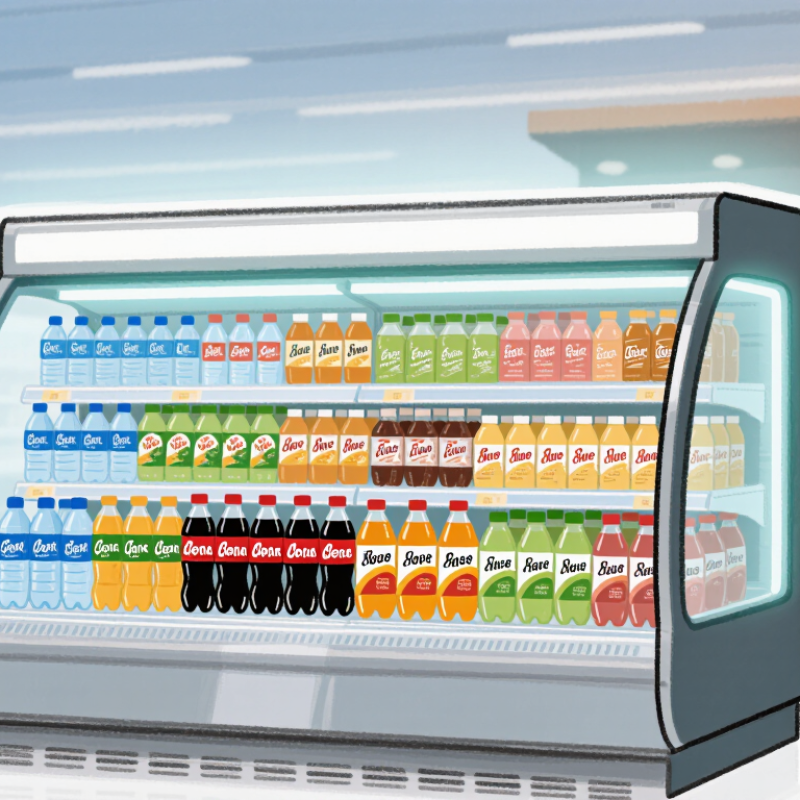
Define Curved Glass Cooler Types by Temperature Classes and Display Use
What Is the Best Curved Glass Cooler for Global Buyers?
A curved glass cooler should be selected by temperature class and display purpose, not appearance alone. Chilled display coolers usually maintain about 2–8°C for beverages, dairy products, and ready-to-eat foods. Frozen display models operate near -18°C or below. Ambient glass cabinets suit packaged goods that need visibility, but not active cooling.
Display use changes the design. Upright coolers save floor space and show products at eye level. Countertop units suit cafés, hotel counters, and compact shops. Low curved cases support quick customer browsing, while larger multilevel cabinets hold more stock. From field experience, door opening frequency affects temperature recovery more than many buyers expect. Poorly planned loading can also block airflow and create warm corners.
Tips: Check the product temperature range, glass heating system, shelf layout, and energy rating. Ask for test data under local climate conditions. Humid regions may need stronger anti-fog performance. Measure aisle width carefully. A beautiful cabinet can become inconvenient when service access is ignored. Temperature sensors are useful, but placement matters. One sensor may miss a cold or warm zone. Always compare actual display needs with the cabinet’s rated capacity.
Compare +2–8°C Beverage Performance, Net Volume, and Shelf Capacity
For global buyers, the best curved glass cooler is not the largest cabinet. It is the unit that holds a stable +2–8°C across every shelf. ISO 23953-2:2015 defines test methods for refrigerated display cabinets and separates temperature classes, including M1 and M2 ranges. Buyers should request test records, not only marketing claims. Measure the warmest shelf after door openings, especially near the curved glass.
Net volume needs careful comparison. A cabinet may advertise 500 litres gross capacity but provide far less usable space. Curved glass, lighting housings, evaporators, and shelf supports reduce the practical area. AHRI Standard 1200 provides recognized methods for rating commercial refrigeration performance, including volume and energy measurements. Ask for net volume, internal dimensions, and the number of adjustable shelves. A useful field check is simple: count how many 330-millilitre cans fit without blocking airflow. It is less impressive than gross litres, but more honest.
Shelf capacity also depends on product height and loading discipline. Four shelves may suit mixed bottles, while five tighter shelves can improve can density. However, excessive loading may disturb air circulation. The U.S. Department of Energy’s commercial refrigeration test procedures show why rated conditions cannot fully represent busy retail use. Real stores open doors often. That changes recovery time. I would compare temperature recovery after repeated openings, not just the lowest displayed reading. One detail is easy to miss: a wider cabinet can deliver more display faces, yet waste energy if sales volume is modest. Data should guide the purchase, but the data needs questioning.
What Is the Best Curved Glass Cooler for Global Buyers? - Compare +2–8°C Beverage Performance, Net Volume, and Shelf Capacity
| Cooler Type | Rated Temperature | Net Volume | Adjustable Shelves | Approx. Shelf Capacity* | Door Configuration | External Size
(W × D × H) | Typical Daily Energy Use** | Best Use |
| Compact Countertop Curved Cooler | +2 to +8°C | 98 L | 2 | 72 × 330 ml cans | Single hinged glass door | 600 × 610 × 850 mm | 1.8–2.4 kWh | Small cafés, reception areas, and checkout counters |
| Single-Door Upright Curved Cooler | +2 to +8°C | 280 L | 4 | 192 × 500 ml bottles | Single self-closing glass door | 600 × 620 × 1,980 mm | 3.0–4.2 kWh | Convenience stores and medium-volume beverage sales |
| Wide Two-Door Curved Cooler | +2 to +8°C | 520 L | 8 | 360 × 500 ml bottles | Two sliding curved glass doors | 1,200 × 750 × 2,050 mm | 5.5–7.5 kWh | Supermarkets, food halls, and high-traffic retail areas |
| Three-Door Commercial Curved Cooler | +2 to +8°C | 780 L | 12 | 540 × 500 ml bottles | Three sliding curved glass doors | 1,800 × 750 × 2,050 mm | 8.0–10.5 kWh | Large supermarkets, wholesale stores, and event venues |
| Low-Profile Island Curved Cooler | +2 to +8°C | 620 L | 6 | 420 × 500 ml bottles | Four-sided curved glass display | 1,500 × 900 × 1,250 mm | 6.5–8.5 kWh | Promotional islands, supermarkets, and self-service zones |
| Heavy-Duty Remote-System Cooler | +2 to +8°C | 1,050 L | 15 | 720 × 500 ml bottles | Four sliding curved glass doors | 2,400 × 850 × 2,100 mm | Site-dependent | Large-format retail and installations with centralized refrigeration |
* Shelf capacity is an approximate planning figure based on 500 ml beverage bottles or 330 ml cans, with normal spacing for air circulation and product visibility. ** Energy-use figures are indicative ranges under typical commercial ambient conditions of approximately 25°C; actual performance varies with climate, loading, door openings, lighting, and operating schedule.
Verify NSF/ANSI 7, IEC 60335-2-89, and Global Electrical Compliance
For global buyers, the best curved glass cooler is not simply the most attractive cabinet. It must prove safe operation across different markets. Ask for current test reports showing compliance with NSF/ANSI 7, especially temperature control, food-contact materials, cleaning access, and condensation performance. A cooler that looks excellent in a showroom may perform poorly near a busy kitchen door.
IEC 60335-2-89 addresses safety for commercial refrigerating appliances, including electrical insulation, abnormal operation, compressor protection, and accessible temperatures. Check whether testing covers the exact model, refrigerant, glass assembly, and control system. An IEC report alone may not satisfy every country. Local deviations can apply. Global electrical compliance also requires careful review of voltage, frequency, plug type, grounding, EMC, and restricted substances. A 220–240 V unit may need different protection in another market.
Tips: Request the rating label, wiring diagram, refrigerant details, and accredited laboratory reports before ordering. Confirm test samples match production units. Inspect door seals, heated glass wiring, shelf loading, and temperature recovery after opening. Keep records for customs and local inspection. Do not rely on a certificate logo alone. It can be outdated, incomplete, or unrelated to the final cabinet. This is where procurement teams sometimes move too quickly. A second technical review is worthwhile.
Select the Best Global Model by Climate Class, Warranty, and Total Cost
For global buyers, the best curved glass cooler is not always the largest model. Climate class matters more than display size. ISO 23953-2 rates cabinets for different temperature and humidity conditions. Class 3 suits 25°C and 60% relative humidity. Class 5 supports 40°C and 40% humidity. A cooler designed for mild Europe may struggle in a hot coastal shop. That mistake becomes expensive.
Warranty terms should match local service realities. Check compressor coverage, parts availability, response times, and labor exclusions. A long warranty means little without trained technicians nearby. The UNEP 2023 Global Cooling Watch report warns that cooling demand could more than triple by 2050. Efficiency will increasingly affect operating budgets. The IEA also reports that cooling already represents about 10% of global electricity use. Small efficiency losses become large annual costs.
Tips: Compare total cost, not only the purchase price. Add electricity, transport, filters, repairs, customs, and expected downtime. Ask for measured energy use under your climate class. Test door seals with a simple paper strip. It should resist gentle pulling. I have seen attractive cabinets fail this basic check. Another imperfect point: published energy figures may use laboratory conditions. Your crowded, frequently opened cooler will consume more. Leave airflow around the condenser, record monthly electricity use, and review the warranty exclusions before ordering.
