
How to Buy Ammonium Chloride Powder in Bulk
Buying ammonium chloride powder in bulk requires more than comparing prices. Product quality, supplier reliability, documentation, and storage conditions can affect every shipment. A serious purchasing plan begins with a clear specification. Define the required grade, purity, particle size, packaging format, and intended compliant application.
Experienced buyers usually request a current Certificate of Analysis, Safety Data Sheet, and batch information. These documents help confirm composition and support workplace safety reviews. They also reveal whether the supplier follows recognized quality procedures. Do not rely only on polished product photos. Ask about manufacturing location, production capacity, inspection methods, and export experience. A small sample can expose caking, unexpected odor, inconsistent granules, or poor packaging before a large order is placed.
Packaging details matter. Moisture-resistant bags, sealed liners, pallets, and clear batch labels can protect the powder during transport. Storage areas should remain dry, clean, and properly managed. Check local import rules, labeling requirements, transport restrictions, and permitted uses before placing an order. Requirements may differ between countries and industries. Professional suppliers should provide practical answers, not vague promises.
Price still matters, but the lowest quotation may become expensive after delays, rejected material, or damaged bags. Compare total landed cost, including freight, insurance, duties, testing, and handling. Payment terms also deserve careful review. I would not treat one successful purchase as proof of permanent reliability. Suppliers can change raw materials, equipment, or procedures. Keep records, inspect deliveries, and reassess performance over time. That discipline supports safer, more consistent, and more accountable bulk purchasing.
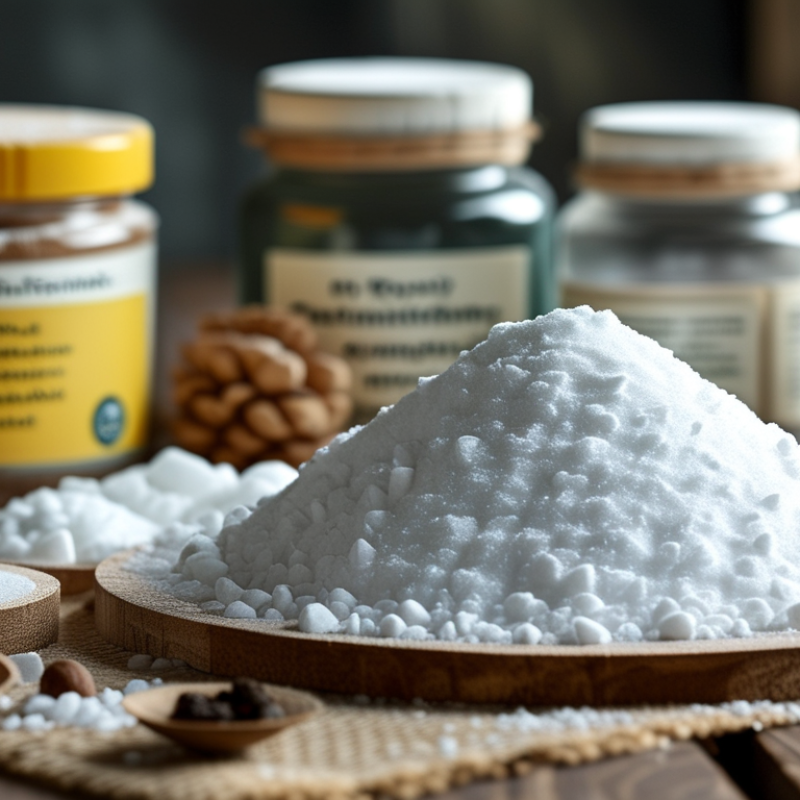
Understanding Ammonium Chloride Powder and Its Common Uses
How to Buy Ammonium Chloride Powder in Bulk
Understanding Ammonium Chloride Powder and Its Common Uses
Ammonium chloride powder is a white, water-soluble salt with the formula NH₄Cl. PubChem lists its molecular weight as 53.49 g/mol. Its sharp, saline character is easy to notice during handling. Do not confuse appearance with purity.
Agriculture remains a major application. The FAO Statistical Yearbook 2023 recorded global fertilizer use at about 185 million tonnes of nutrients in 2021. That figure covers all fertilizer nutrients, not ammonium chloride alone. However, it shows the scale of the agricultural market. Ammonium chloride supplies nitrogen and chloride, especially where chloride is agronomically acceptable. It can also support zinc-carbon battery production, metal treatment, soldering fluxes, and selected industrial processes. Food-grade applications require separate regulatory review.
Bulk buyers should request an assay, moisture result, particle-size distribution, and heavy-metal limits. Packaging matters too. Moisture can cause caking during long ocean shipments. A dry, lined bag protects flowability better. Ask for the safety data sheet and certificate of analysis before ordering. ECHA classifies ammonium chloride as a substance requiring responsible hazard communication. Local rules still control storage, labeling, and use. Price alone is a weak buying metric. A cheaper lot may create waste, delays, or failed production tests. I would also verify whether the powder meets fertilizer, technical, or food-grade specifications, because these grades are not interchangeable.
Defining Your Bulk Quantity, Purity, and Packaging Requirements
How to Buy Ammonium Chloride Powder in Bulk
Defining your bulk quantity starts with actual consumption, not a supplier’s minimum order. Review monthly usage, production cycles, storage capacity, and safety stock before requesting quotations. The International Fertilizer Association’s 2024 medium-term outlook projects global fertilizer demand to grow by roughly 2% annually through 2028. That trend may support supply availability, but it does not guarantee stable pricing. A practical first order may cover one to three months of use. Larger volumes can reduce unit cost, yet excess stock may absorb moisture or become difficult to rotate. Storage matters.
Purity must match the application. Ask for an assay range, moisture content, insoluble matter, and heavy-metal limits on every Certificate of Analysis. For technical, agricultural, food, or pharmaceutical use, standards differ significantly. The United States Pharmacopeia and Food Chemicals Codex provide recognized specifications for higher-control applications, while industrial buyers may accept broader limits. Do not request “high purity” without numbers. That phrase is too vague. I have seen purchasing teams compare assay percentages while overlooking moisture and particle size. That mistake can affect flow, dissolution, and final-product consistency.
Packaging should fit handling equipment and warehouse conditions. Common options include sealed 25-kilogram bags and flexible intermediate bulk containers around 500 to 1,000 kilograms. Confirm inner liners, pallet configuration, lot coding, and resistance to humidity. The United Nations Manual of Tests and Criteria also supports careful transport classification and packaging review. A small detail remains easy to miss: request retained samples before approving a full shipment. It costs time, but it can expose caking or inconsistent powder behavior early.
How to Buy Ammonium Chloride Powder in Bulk - Defining Your Bulk Quantity, Purity, and Packaging Requirements
| Requirement | Typical Bulk Planning Range | What to Confirm Before Ordering | Recommended Data to Record | Practical Note |
|---|---|---|---|---|
| Order Quantity | 25 kg to multiple metric tonnes per shipment | Minimum order quantity, production lot size, annual demand, and whether partial pallet or mixed-load delivery is allowed | Required quantity per order, monthly usage, annual forecast, and safety-stock level | Larger, scheduled orders may simplify logistics and reduce packaging cost. |
| Chemical Identity | Ammonium chloride; CAS No. 12125-02-9; formula NH4Cl | Chemical name, CAS number, molecular formula, grade designation, and applicable regulatory classification | Product name, CAS number, grade, country of origin, and lot identification | Use the same identity information on the purchase order and receiving documents. |
| Purity Grade | Industrial or technical grade; higher-purity material for laboratory, pharmaceutical, or regulated applications | Required assay, impurity limits, test method, and whether the specification is minimum, nominal, or typical | Assay requirement, impurity profile, intended use, and governing specification | Do not select a higher-purity grade unless the application or regulation requires it. |
| Assay | Often specified at approximately 99% or higher for many commercial grades; exact limits vary by specification | Assay basis, analytical method, acceptance limit, and whether results are reported on an as-received basis | Minimum assay, test method, actual lot result, and certificate reference | A certificate of analysis should identify the tested lot. |
| Moisture and Appearance | White crystalline powder or granules; moisture limit depends on the grade and application | Color, odor, free-flowing behavior, moisture limit, caking tolerance, and visual inspection criteria | Appearance specification, moisture result, caking observation, and inspection date | Ammonium chloride is hygroscopic to some extent, so moisture protection is important. |
| Particle Size | Powder, fine crystal, or granular forms; sieve limits must be set for the process | Target mesh or micron range, permitted oversize and undersize fractions, and sampling method | Particle-size distribution, sieve result, process requirement, and acceptable tolerance | Particle size affects dissolution, feeding, dust generation, and material handling. |
| Packaging Format | 25 kg bags, 500–1,000 kg flexible intermediate bulk containers, or bulk transport where suitable | Bag material, inner liner, filling weight, pallet pattern, lifting loops, and maximum safe working load for bulk bags | Net weight, package type, pallet count, bag dimensions, and packaging condition | Packaging should limit moisture ingress and withstand normal transport handling. |
| Storage Conditions | Cool, dry, well-ventilated storage in tightly closed packaging | Humidity control, protection from water, separation from incompatible materials, stacking limits, and stock rotation | Storage temperature and humidity policy, warehouse location, received date, and retest or review date | Keep containers closed and protect the powder from moisture and contamination. |
| Documentation | Specification sheet, safety data sheet, certificate of analysis, and transport documents as applicable | Document language, revision date, lot traceability, test results, hazard information, and regulatory status | Document number, revision, lot number, issue date, and approval status | Review documents before shipment rather than waiting until receipt. |
| Quality Control | Pre-shipment document review plus receiving inspection and representative sampling | Sampling plan, retained sample policy, approved laboratory, test frequency, and nonconformance procedure | Inspection checklist, sample ID, test results, deviations, and release decision | The sampling plan should reflect lot size and the risk of contamination or moisture uptake. |
| Delivery Terms | Domestic or international shipment by road, rail, sea, or multimodal transport | Incoterm, destination, lead time, customs documents, insurance, unloading equipment, and delivery appointment | Ship date, arrival date, transport mode, shipment weight, freight terms, and customs requirements | Confirm current transport and import requirements for the destination country. |
| Pricing Basis | Price normally varies with grade, quantity, package type, freight, duties, and delivery terms | Currency, price validity, minimum order quantity, taxes, freight, packaging charges, and payment terms | Quoted unit price, total landed cost, currency, validity period, and payment schedule | Compare total landed cost rather than product price alone. |
Evaluating Suppliers, Certifications, and Product Quality
How to Buy Ammonium Chloride Powder in Bulk
Supplier evaluation should begin with traceable evidence, not a low quotation. The International Fertilizer Association’s 2024 outlook estimates global fertilizer demand at about 205 million tonnes of nutrients in 2024/25. This scale increases competition, but it does not guarantee consistent ammonium chloride quality. Ask suppliers for recent batch records, production capacity, export experience, and references from comparable industries.
Require a current certificate of analysis for every lot. Check assay, moisture, insoluble matter, particle size, and caking tendency. Small differences matter during blending or solution preparation. The testing laboratory should preferably follow ISO/IEC 17025 requirements. ISO 9001 certification supports process control, but it is not product certification. A certificate is not proof of every lot.
Review the Safety Data Sheet, technical specification, packaging details, and lot-traceability process before signing. Confirm destination-specific chemical, transport, labeling, and import requirements. Request sealed samples from the proposed production lot. Test them independently, especially after long sea transport. Humidity can change powder flow. It happens. Compare supplier data with laboratory results, delivered weight, and pallet condition. A practical contract should define acceptance limits, retesting rights, storage conditions, and remedies for rejected material. The overlooked detail is often packaging, not chemistry.
How to Buy Ammonium Chloride Powder in Bulk: Supplier Evaluation Priorities
For bulk ammonium chloride procurement, product quality and certification evidence should receive the highest evaluation weight. Buyers should verify the applicable grade specification, certificate of analysis, batch traceability, packaging integrity, delivery capability, and commercial terms before placing an order.
Comparing Prices, Shipping Terms, and Minimum Order Quantities
How to Buy Ammonium Chloride Powder in Bulk
Bulk purchasing starts with a clear product specification. Confirm purity, particle size, moisture limits, packaging, and intended industrial use. A quotation should include the price per kilogram, not only the total shipment value. Compare at least three written offers. The cheapest figure may hide testing fees, pallet charges, or export documentation costs. Ask for a recent certificate of analysis and safety data sheet. These documents help verify quality and support responsible handling decisions.
Shipping terms can change the real cost considerably. Under EXW, the buyer usually manages pickup, export arrangements, and freight. FOB may provide more control at the loading port, while CIF includes ocean freight and insurance to the destination port. Check whether customs clearance, duties, inland delivery, and storage are excluded. Delivery time matters too. A delayed container can cost more than a slightly higher product price. I once underestimated port charges in a purchasing plan; the comparison looked accurate, but it was not complete.
Tips: Request a landed-cost breakdown before approval. Confirm the minimum order quantity, production lead time, and payment schedule in writing. If the MOQ exceeds your storage capacity, ask about split shipments or smaller trial orders. Inspect packaging details, such as moisture barriers and pallet strength. Keep a small quality sample for comparison after delivery. Do not rely on a verbal promise.
Finalizing the Order, Storage, and Safe Handling Procedures
Finalizing a bulk ammonium chloride powder order requires more than agreeing on price. Confirm the purity, particle size, quantity, packaging, and delivery schedule in writing. Request a current SDS and certificate of analysis for the exact production lot. Check the lot number, net weight, seal condition, and pallet count when the shipment arrives. Ask whether the powder requires special transport arrangements in your destination. Local rules may vary.
Keep the purchase order, SDS, inspection records, and receiving photographs together. Small details matter. An overlooked moisture requirement can affect flow, weighing, and process consistency. Store bags or drums in a cool, dry, well-ventilated area. Keep containers closed until use, raised off the floor, and protected from rain and condensation. Use clean, labeled tools, and keep the material away from strong alkalis and incompatible chemicals. Operators should wear safety glasses, suitable gloves, protective clothing, and respiratory protection when dust may form. Open containers slowly, preferably with local dust extraction. Never sweep powder into drains. Isolate spills and avoid creating dust. Collect the material with an approved method, then place waste in a labeled container. Review the procedure after the first delivery. Real conditions may expose gaps in a plan that looked complete on paper.
