How to Choose a Planetary Gearbox for Your Application
Choosing a planetary gearbox is not just a matter of matching a ratio. Your application sets the real demands: motor speed, output torque, duty cycle, shock loads, and available space. A compact unit may fit neatly beside a conveyor roller, yet run hot if its load rating is too low. The details matter. So does the operating environment. Dust, washdown, frequent starts, and long shifts can all change the right choice.
Robert L. Norton is a respected machine-design author whose work covers gears and mechanical systems. I can’t verify a verbatim quotation from him on planetary gearbox selection, so this is an editorial paraphrase, not a direct quote: “Choose around actual loads, speed, and service life—not ratio alone.” That principle offers a useful starting point for evaluating a Gearbox Planetary Gear. Compare rated torque with peak torque, check backlash where positioning matters, and confirm that the input speed stays within the manufacturer’s limits. Then consider mounting orientation, lubrication, noise, and maintenance access. Small omissions can become expensive. A gearbox that looks right on a specification sheet may still disappoint after months of cycling. There is rarely one perfect answer; trade-offs remain. This guide explains how to weigh them, ask suppliers sharper questions, and select a unit that suits the machine—not just the catalog.
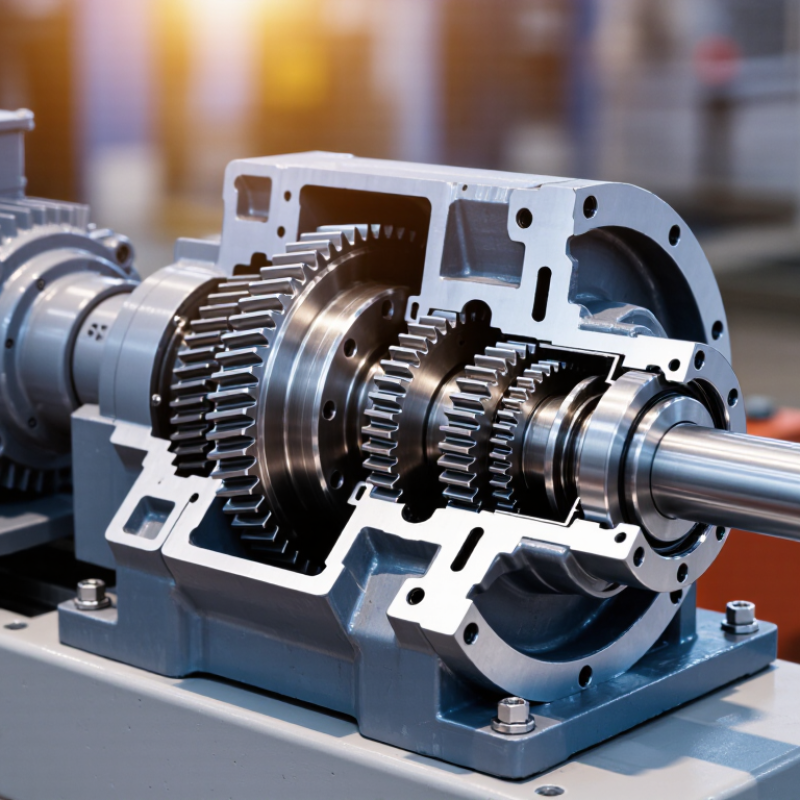
Identify the Application’s Operating Requirements
Before choosing a planetary gearbox, describe what the machine actually does during a normal shift. Record required output speed, torque, duty cycle, and time spent at peak load. Include starts, stops, reversals, and shock loads; a conveyor rarely runs under ideal conditions. Measure it in context. Motor nameplate power alone does not reveal the gearbox’s full operating demand.
Note the available space, mounting position, input speed, and shaft arrangement. Check ambient temperature, dust, moisture, washdown, and nearby vibration. These details affect seals, lubrication, thermal limits, and service intervals. A compact unit beside a hot oven may need different thermal checks than one in a clean room. Do not assume a listed peak torque is available continuously.
Compare the load with the gearbox’s continuous ratings, then verify acceleration torque and expected life using application data. If the load profile is uncertain, log current or torque during representative cycles instead of relying on memory. That takes effort. A spreadsheet can make an estimate look exact; it isn’t. A jam, heavy batch, or later change in cycle time can alter the demand. Document assumptions and revisit them after installation, when operating temperatures and noise can be measured.
Calculate the Required Torque, Load, and Duty Cycle
Before choosing a planetary gearbox, define the torque required at its output shaft. For a rotating arm, multiply the applied force by the distance from the shaft. A 150-newton load acting 0.2 meters away creates 30 newton-meters of static torque. That is only a starting point. Acceleration, friction, and sudden changes in load can raise the real demand. Measure the real load. If the machine starts under load, include that condition in your calculation rather than relying only on steady running values.
Next, check the gearbox’s allowable output torque against both normal and peak demand. Account for the motor speed, reduction ratio, and gearbox efficiency; a higher ratio does not remove the need to verify the output limit. Duty cycle matters, too. Record how many minutes the gearbox runs per hour, how often it starts and stops, and how long peak loads last. A conveyor running continuously may produce more heat than a mechanism used for brief movements, even when their peak torque is similar. Don’t guess here. Real operating patterns are often messier than the first estimate. Leave suitable margin, then confirm that the selected unit can handle the required torque, speed, mounting position, and thermal conditions. If measurements are uncertain, revisit them before finalizing the selection.
How to Choose a Planetary Gearbox for Your Application
Calculate the Required Torque, Load, and Duty Cycle
Illustrative example: a 0.75 kW motor running at 1,500 rpm drives a 20:1 gearbox at approximately 75 rpm. At 90% assumed efficiency, its estimated output torque is about 86 N·m. For a 55 N·m continuous load and a 1.5 service factor, the design torque is 82.5 N·m; the example gearbox’s 120 N·m rating also exceeds the 110 N·m peak load. Confirm that the gearbox can handle the application’s actual duty cycle, peak duration, speed, and thermal limits before selection.
Choose the Gear Ratio and Output Speed
Choose the ratio from the required output speed, not from a torque target alone. Calculate the reduction ratio as motor speed divided by desired gearbox output speed. For example, a 1,500 rpm motor and a 100 rpm output require a nominal 15:1 ratio. Check the planetary gearset’s arrangement and tooth counts; the same components can produce different ratios when the input, output, or fixed member changes. Then verify the rated output speed under the actual motor frequency and load. A conveyor may run smoothly without product, then slow when a loaded pallet reaches the incline. Small details matter.
A higher reduction ratio can increase output torque, but it also adds losses and may affect heat, backlash, and response. Include the machine’s duty cycle, starting frequency, peak load, and required positioning accuracy in the selection.
The U.S. Department of Energy’s 2014 report, Improving Motor and Drive System Performance, notes that motor-driven systems account for about 68% of U.S. manufacturing electricity use. The International Energy Agency’s 2011 report, Energy-Efficiency Policy Opportunities for Electric Motor-Driven Systems, estimates a 46% share of global electricity use. These figures are not gearbox-efficiency ratings, but they show why matching speed and load matters.
I would still question a ratio chosen from nominal speed alone. Real loads are less tidy. Check the gearbox’s permissible input speed and thermal rating against the actual operating profile.
Compare Gearbox Types, Materials, and Efficiency
A planetary gearbox suits compact machines that need high torque in a small footprint. Spur gearboxes can be simpler and easier to service, while helical designs usually run more quietly. Worm gearboxes offer large reductions, but their sliding contact can create more heat. Check the real duty cycle, not just peak torque. A conveyor starting under load needs a different ratio and thermal margin from a lightly loaded positioning axis.
Materials shape service life. Hardened alloy-steel gears handle repeated shock loads; steel housings resist deformation, while aluminum can reduce mass in mobile equipment. Look closely at bearing support, lubrication, seals, and ambient temperature. A catalog rating may assume ideal conditions. It can mislead.
Efficiency matters across the full drive train. The U.S. Department of Energy’s 2014 motor-systems report estimates that motor-driven systems use about 68% of U.S. manufacturing electricity. The IEA’s Energy Efficiency 2023 report puts industry’s share near 37% of global final energy use. These figures make small transmission losses worth checking. Ask suppliers for measured efficiency at your actual ratio, speed, load, and temperature; do not compare headline figures alone. A one-stage planetary set may perform differently from a multi-stage unit. Confirm noise, backlash, and heat rise in the application. A little uncertainty remains until it is tested.
Check Mounting, Environmental, and Maintenance Needs
A planetary gearbox can fit the torque requirement on paper and still be difficult to install. Confirm the mounting face, bolt pattern, shaft diameter, and allowable shaft loads against the machine drawing. Check the required orientation, too; some lubrication arrangements depend on how the unit is positioned. Leave room for the motor, fasteners, and a tool to reach them. A few millimeters can matter when a gearbox sits beside a guard or frame rail. Small details matter.
Match the enclosure and materials to the actual environment, not just the room’s average temperature. Dust, moisture, cleaning spray, vibration, and nearby heat sources can all affect service life. Ask how the gearbox should be protected in your specific conditions, and verify any stated ingress rating with the supplier. Maintenance access deserves the same attention. Can a technician inspect seals, check for leaks, and follow the recommended lubricant interval without dismantling nearby equipment? One easy mistake is assuming “sealed” means maintenance-free. It may not. Record operating temperature and load during early runs, then compare them with expected values. I would still recheck those assumptions after installation; real layouts often reveal constraints that the drawing missed.
