How to Choose the Best Plastic Compression Fittings for Your Needs?
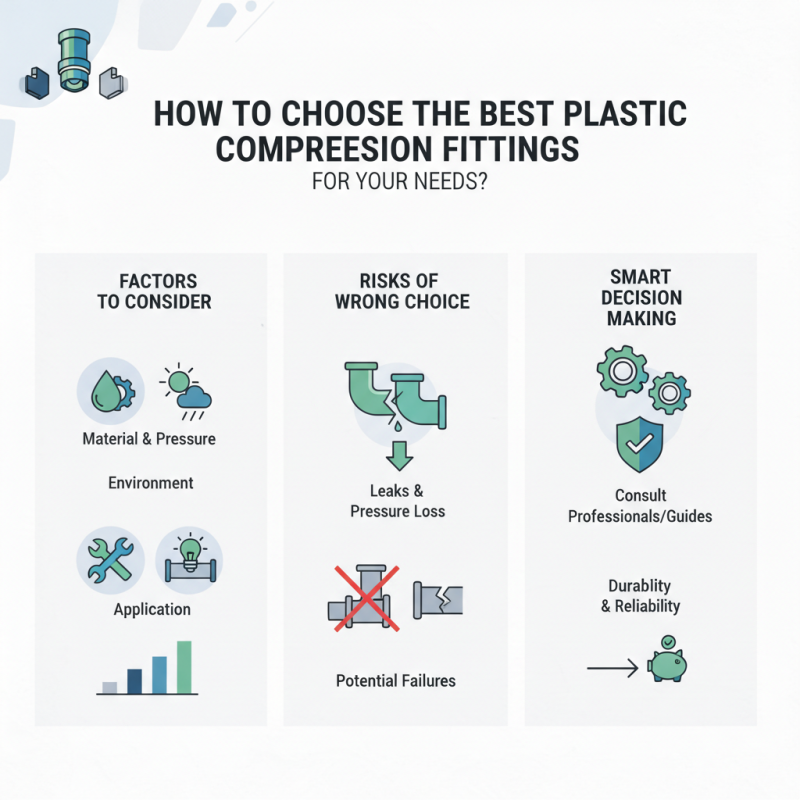
When selecting the right Plastic Compression Fittings, it’s crucial to consider various factors that influence functionality and compatibility. These fittings are widely used in plumbing and irrigation systems due to their durability and ease of installation. However, not all options are created equal. Each application may have unique requirements that impact your choice.
The material of the fittings, pressure ratings, and the specific environment they will be exposed to are essential factors. Choosing the wrong fitting could lead to leaks or pressure loss. Details matter here. For instance, using a fitting designed for higher pressures in a low-pressure system might seem excessive yet could offer added security. Conversely, opting for an undersized fitting can result in potential failures.
Your experience with Plastic Compression Fittings will also shape your decision-making process. Consider past projects and what worked well or fell short. Engage with professionals or consult guides to ensure you are making informed decisions. It’s not just about immediate needs; it’s important to reflect on durability and long-term reliability. Making the right choice today will save you time and money tomorrow.
Understanding Plastic Compression Fittings and Their Applications
Plastic compression fittings have become a popular choice across various applications. Understanding their structure and uses is vital. These fittings are designed for easy assembly and disassembly. They work by compressing a ring against the pipe, creating a secure seal. This feature makes them ideal for plumbing, irrigation systems, and even HVAC applications.
When selecting plastic compression fittings, consider the material type. Polypropylene and PVC are common choices. Each has its advantages, including resistance to chemicals and UV radiation. Some fittings may not withstand extreme temperatures. Always check the specifications before making a decision.
**Tips:** Choose fittings that match your pipe diameters precisely. Inaccurate sizing can lead to leaks. Regularly inspect fittings for wear and tear. Cracks or discoloration may indicate a need for replacement. Proper installation is crucial. Ensure the area is clean and free from debris to prevent contamination.
Plastic Compression Fittings Application Overview
Key Factors to Consider When Choosing Plastic Compression Fittings
When selecting plastic compression fittings, several key factors determine their suitability for your projects. The material composition is paramount. High-density polyethylene (HDPE) and polyvinyl chloride (PVC) are common choices. According to industry reports, HDPE can withstand a wider temperature range, offering better performance in extreme conditions. However, PVC typically provides better chemical resistance. Understanding the specific environment where the fittings will be used is essential.
Sizing is another critical consideration. Proper fitting sizes ensure optimal flow and prevent leaks. Many professionals miss this aspect, leading to inefficiencies. For instance, data indicates that proper sizing can enhance flow rates by up to 25%. A detailed analysis of your system's requirements helps in making an informed choice.
Lastly, installation ease cannot be overlooked. Some fittings require specialized tools or skills. Reports suggest that user-friendly designs can significantly reduce installation time, which is crucial in large projects. Reflecting on previous experiences, it’s clear that complex installations can lead to costly mistakes. A balance between ease of installation and functionality often leads to better long-term results. Choose wisely and consider these factors for your specific needs.
Material Compatibility: Matching Fittings to Your Specific Needs
When selecting plastic compression fittings, material compatibility is crucial. Different applications demand specific materials that can withstand various temperatures and chemical exposures. For example, polypropylene is often chosen for its chemical resistance to acids and bases, making it ideal for agricultural and industrial settings. According to a 2022 industry report, 65% of failure in fittings occurs due to improper material selection.
Moreover, environmental factors can affect performance. UV stability is essential for outdoor applications. Standard PVC fittings may degrade under prolonged sunlight exposure. In contrast, reinforced fittings can withstand harsh conditions, ensuring longevity. A study revealed that using the right material reduces risks by up to 45%.
Listening to expert opinions can guide your choices. Consult industry professionals who understand the nuances of different materials. This can help avoid missteps that could lead to costly leaks or replacements. Don't overlook the importance of matching your fittings to the specific requirements of your project. Your processes depend on it.
Sizing and Dimensions: Ensuring Proper Fit for Your Systems
When selecting plastic compression fittings, sizing and dimensions are crucial. A proper fit prevents leaks and ensures system efficiency. According to industry reports, fittings that do not meet the required diameter can reduce flow efficiency by more than 25%. This significant loss underscores the importance of precise measurements.
Most plastic fittings have standardized sizing. Common diameters include 1/2 inch, 3/4 inch, and 1 inch. However, variations exist based on material type and use case. Always consult technical data sheets for specific sizing information related to your application. Even slight variations can lead to failure under pressure, leading to costly repairs.
A common misstep is overlooking the installation environment. Temperature changes can affect the fit. For example, materials may expand in heat and contract in cold. It is essential to factor in the operating conditions when choosing sizes. Consider conducting regular inspections to ensure ongoing reliability. Small inconsistencies in fitting sizes can lead to larger system failures over time.
Cost vs. Quality: Finding the Right Balance for Your Budget
When selecting plastic compression fittings, cost is often a crucial factor. A balance between quality and cost is essential. According to industry reports, approximately 30% of buyers prioritize price over reliability. Cheaper products can lead to failures. This may result in costly repairs or replacements. Ultimately, investing in higher-quality fittings could save significant costs long term.
Yet, not all expensive fittings guarantee superior performance. A study by the Plastics Industry Association showed that around 15% of top-tier fittings underperformed in rigorous conditions. It's vital to assess the specific needs of your project. Factors such as pressure ratings and chemical resistance are key considerations. A well-informed decision can prevent future disappointments.
Opting for the cheapest option may lead to short-term savings but can compromise safety and efficiency. Understanding the specifications and application scenarios is vital. Sometimes, a mid-range fitting can provide the best balance between affordability and performance. Evaluating multiple suppliers and products is important. A thorough comparison can uncover hidden advantages and disadvantages in quality and price.
