How to Choose the Right Battery Backup System for Your Needs?
In today's fast-paced world, power outages can disrupt lives and businesses. Choosing the right battery backup system is crucial. According to a recent study by MarketsandMarkets, the battery backup market is expected to exceed $18 billion by 2025. This growth highlights the increasing dependence on reliable power sources.
Evaluating your specific needs is essential. Consider the appliances you want to protect and the duration of power outages in your area. For instance, a small home may only require a battery backup system with a capacity of 1,500 watts. In contrast, larger households or businesses might need up to 5,000 watts or more.
Ignoring the nuances of battery backup systems can lead to costly mistakes. Many overlook factors like battery type and installation services. Lithium-ion batteries, for example, provide higher efficiency but come at a premium price. The right choice depends on individual preferences and budget constraints. Taking the time to carefully assess your options can make all the difference in safeguarding what matters most.
Understanding Your Power Needs and Requirements
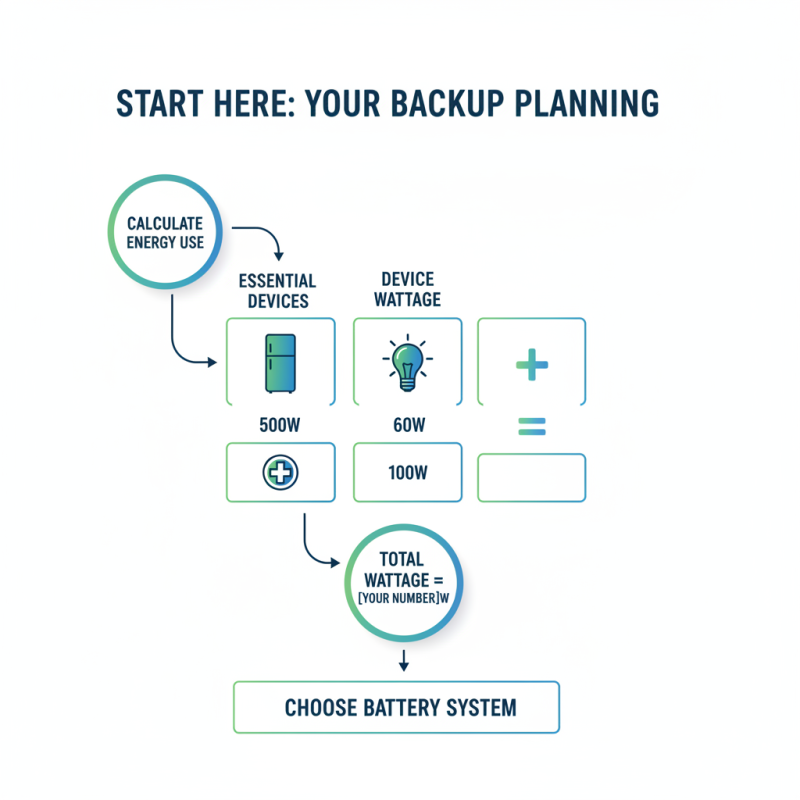
Choosing the right battery backup system begins with understanding your power needs. Start by calculating your energy consumption. List all devices you want to power during an outage. Include essential items like refrigerators, lights, and medical equipment. Each device has a specific wattage. Total these numbers to get a clearer picture of your requirements.
Consider the duration of power outages in your area. Some places have frequent short outages, while others experience longer disruptions. Evaluate how long you can go without electricity. This will help determine battery capacity. Keep in mind, higher capacity systems often come with a higher cost. Balancing cost with needs can be tricky.
Finally, think about future needs. Are you planning to add more devices? What if your energy consumption increases? It's easy to overlook future needs while focusing on the present. Make sure the system you choose can adapt to changing circumstances. Reflect on these factors to make a more informed decision, ensuring you select a solution that fits now and later.
Exploring Different Types of Battery Backup Systems
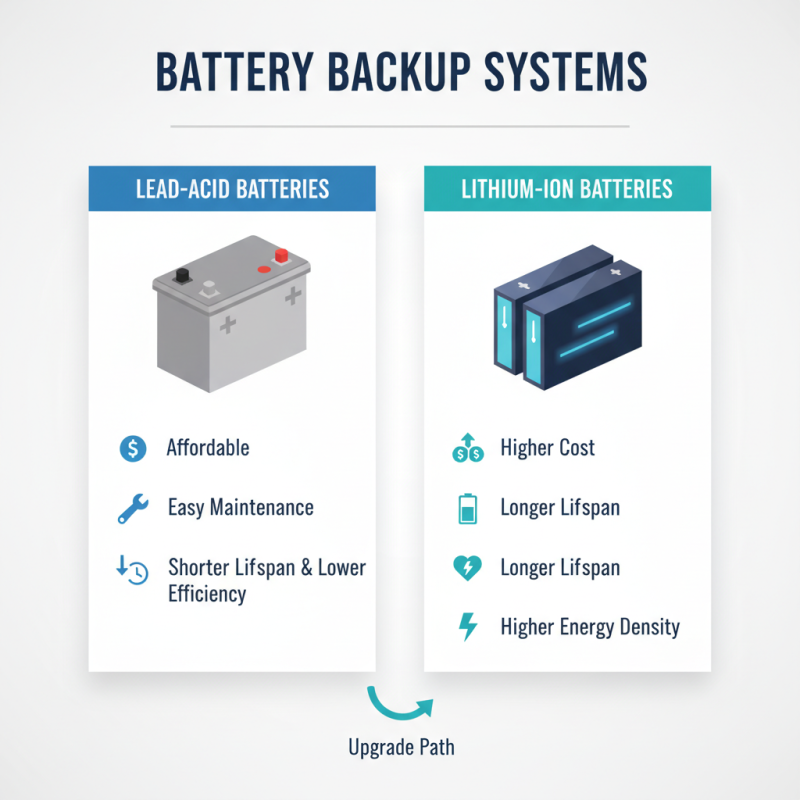
When selecting a battery backup system, it's essential to understand the various types available. Each system serves specific needs. Lead-acid batteries are affordable and easy to maintain. However, they have a shorter lifespan and lower efficiency compared to lithium-ion options. Lithium-ion batteries, while more expensive, offer longer life cycles and higher energy density.
Consider your power needs carefully. The capacity of the backup system should match your usage patterns. According to a report by the Department of Energy, about 30% of households rely on battery backups during outages. More homes are transitioning to solar-plus-storage systems. This combo can improve efficiency and reduce reliance on grid power.
Tips: Look for systems with expandable capacity. This allows for future upgrades without needing a complete replacement. Evaluate the system's charging time. Faster charging can be crucial during prolonged outages.
Choosing the right system requires careful evaluation. Don't rush the process. An inappropriate choice can lead to inadequate power supply. Always compare different technologies and consider future energy needs. Assessing the long-term savings against initial costs is vital. Be sure to factor in maintenance and operational costs as well.
Evaluating Battery Capacity and Run Time for Your Applications
When selecting a battery backup system, capacity and run time are crucial. Battery capacity determines how much power the system can store. It is measured in ampere-hours (Ah). A larger capacity allows more devices to run for a longer time. For essential applications, like medical equipment, a higher capacity is often necessary. According to industry reports, a typical household may need at least 10-20 kWh for critical appliances.
Run time, the duration a system can power your devices, is influenced by capacity and the load. If you only need backup for a few hours, calculate the power consumption of your devices first. For instance, a fridge may use around 100-800 watts. The total wattage will help determine the required battery size. Some applications might require continuous power for longer durations, making this calculation vital.
Tip: Assess your power needs before purchasing. Create a list of devices you plan to use. Estimate how long you'll need them. Aim for extra capacity to account for inefficiencies. This approach allows room for expansion and future needs. Monitoring your actual usage helps refine decisions but also uncovers discrepancies. Some preferred systems might fall short. This isn’t uncommon. Understanding your unique requirements will directly influence your choice.
Battery Backup System Capacity and Run Time Comparison
Assessing Installation and Maintenance Considerations
Choosing the right battery backup system involves several installation and maintenance considerations. Proper placement is critical. Battery systems should be installed in cool, dry areas. High temperatures can reduce battery life significantly. Studies show that operating temperatures above 25°C can shorten lifespan by up to 20%. This is vital for long-term reliability.
Wiring and connections are essential as well. Poor installation can lead to overheating or failure. Industry data indicates that nearly 30% of battery failures are due to improper connections. Regular maintenance checks are necessary to ensure longevity. Checking terminal connections monthly can prevent issues. Corrosion can build up quickly, affecting performance.
User manuals often recommend specific maintenance routines. Many users overlook these. Neglecting maintenance can lead to deeper issues down the line. Costs can escalate significantly if a battery fails unexpectedly. Regular monitoring of battery health can save money. It also ensures the system performs optimally when needed most.
Budgeting for Your Battery Backup System Options
When budgeting for a battery backup system, it's crucial to understand your energy needs. According to a report by the National Renewable Energy Laboratory, around 20% of households in the U.S. experience power outages annually. This increases the importance of having a reliable backup solution. A typical home system usually costs between $2,000 and $5,000, depending on capacity and features.
Choosing the right system should not only be based on price. Consider your power consumption during outages. For instance, a small UPS might suffice for essential devices, while larger systems are vital for home appliances. The average household uses about 30 kWh per day, so calculate how much power you need for critical devices. The installation cost can also add 10%-20% to your budget, often overlooked in initial planning.
It's easy to underestimate future energy needs. With electric vehicles and smart home technology becoming more common, your energy requirements could increase. Additionally, battery life can vary; many systems last only 5-15 years. Regular maintenance and eventual replacement should factor into your long-term budget. Plan for expansion, too, as energy demands evolve.
How to Choose the Right Battery Backup System for Your Needs? - Budgeting for Your Battery Backup System Options
| Battery Type |
Capacity (Ah) |
Estimated Backup Time (Hours) |
Average Cost ($) |
Ideal Use |
| Lead Acid |
100 |
4-6 |
150 |
General Use |
| Lithium-ion |
200 |
6-10 |
600 |
Home & Office |
| Nickel Cadmium |
150 |
3-5 |
300 |
Commercial Use |
| Gel Cell |
80 |
3-4 |
200 |
Off-grid Systems |