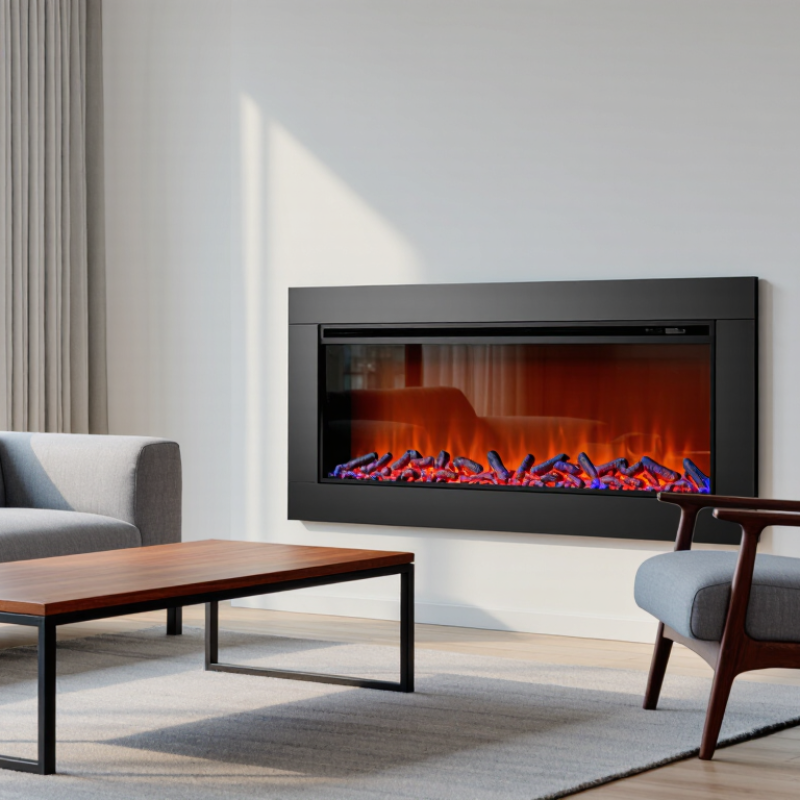
How to Choose a Ventless Electric Fireplace in 2026?
Choosing a Ventless Electric Fireplace in 2026 requires more than comparing flame colors and screen sizes. A convincing model must fit the room, electrical circuit, heating needs, and installation environment. “Ventless” means no chimney or combustion exhaust. It does not mean risk-free.
Industry data supports careful evaluation. The U.S. Energy Information Administration’s 2020 Residential Energy Consumption Survey reported that electricity served as the primary space-heating energy source for about 39% of U.S. homes. That figure shows why electric heating remains relevant, especially in apartments, renovated bedrooms, and homes without gas connections. Grand View Research’s electric fireplace market analysis also identifies rising interest in convenient, decorative heating products. However, market forecasts often combine built-in, wall-mounted, and portable units. Their categories are not always perfectly comparable.
Safety should lead the decision. Readers should check recognized testing marks, clearances, circuit requirements, and manufacturer instructions. UL 1278 covers movable and wall- or ceiling-hung electric room heaters, while local requirements may differ. A certified product with realistic heat output is usually more valuable than a dramatic display panel. Small details matter: a warm plug, a crowded outlet, or curtains placed near the heater deserves immediate attention.
Room size matters too. Many electric fireplaces are designed for supplemental heat, not whole-home heating. Measure the space, review the wattage, and consider insulation before trusting a headline heating range. This guide compares heating performance, operating cost, flame realism, controls, noise, maintenance, and warranty support. Some conclusions remain subjective. Flame appearance is personal. Forecasts can change. Good choices still come from verified specifications, practical experience, and a willingness to question attractive claims.
Understanding How Ventless Electric Fireplaces Work
A ventless electric fireplace does not burn gas or wood, so it needs no chimney, flue, or outside air. Its flame is usually an LED projection, while heat comes from resistance elements or infrared emitters. A quiet fan may push warm air through the grille. The effect looks like fire, but no combustion occurs.
The U.S. Department of Energy explains that electric resistance heating converts nearly all incoming electricity into heat at the point of use. That does not guarantee low bills. The U.S. Energy Information Administration reported an average residential electricity price of about 16.5 cents per kilowatt-hour in 2024. A 1,500-watt heater running for four hours uses roughly 6 kilowatt-hours. Check the calculation.
Look for adjustable heat, a thermostat, overheat protection, and a certified plug or installation method. The National Fire Protection Association continues to identify heating equipment as an important source of home fires, even though electric units avoid open flames.
Keep curtains, paper, and furniture away from the outlet and heater grille. A small room may warm quickly; a drafty open-plan room may not. Infrared heat can feel pleasant on your hands, yet it may leave distant corners cool. That limitation is easy to overlook.
Assessing Room Size, Heating Capacity, and Energy Use
How to Choose a Ventless Electric Fireplace in 2026?
Room size should guide your heating decision, not the fireplace’s appearance. Measure the room’s length, width, ceiling height, window area, and insulation quality. A small, well-insulated bedroom may need far less heat than a drafty open-plan space. Many electric fireplaces offer around 1,500 watts, equal to roughly 5,100 BTUs. That output usually suits supplemental heating, not whole-home heating. My first estimate was too optimistic. Cold floors and large windows changed the result.
Tips: Check the heating label. Compare watts, BTUs, and coverage claims. Leave extra capacity for poor insulation, but avoid oversizing for one small room. A portable thermometer can reveal uncomfortable cold spots after thirty minutes of use. Do not share a high-power heater with other demanding appliances on the same circuit.
Energy use depends on runtime, thermostat settings, and local electricity prices. A 1,500-watt heater uses 1.5 kilowatt-hours per hour at full output. Multiply that figure by operating hours and your utility rate. Thermostatic cycling can reduce consumption, although real savings vary by room conditions. Keep doors closed when heating one area, and position the unit away from curtains or furniture. Read the installation instructions carefully. Electrical safety deserves more attention than decorative features.
Comparing Fireplace Styles, Features, and Installation Options
Choosing a ventless electric fireplace in 2026 starts with room use, not appearance. Wall-mounted models suit renters and shallow rooms. Recessed units look cleaner but need framed-wall access. Freestanding styles offer easier placement and relocation. Insert models can refresh an old opening, though measurements must be exact. A practical check is simple: measure the wall, outlet distance, and furniture clearance before comparing finishes.
Features should match real habits. Look for adjustable heat, thermostat control, flame-only mode, timer, remote operation, and automatic overheat protection. Electric resistance heat converts supplied electricity into heat at the appliance, according to the U.S. Department of Energy’s Energy Saver guidance. However, that does not make every model inexpensive to run. The U.S. Energy Information Administration’s Residential Energy Consumption Survey shows electricity remains a major household heating energy source, but costs vary sharply by region and season. Calculate wattage multiplied by daily hours, then compare your local electricity rate.
Installation is usually simpler than combustion heating because no chimney or gas line is required. Plug-in installation may work for lower-power units when the receptacle and circuit are suitable. Hardwiring can provide a cleaner finish, but a qualified electrician should verify load capacity and local requirements. NFPA’s Home Heating Fires report estimated about 48,530 residential heating fires annually from 2016 to 2020. Electric fireplaces avoid flames and exhaust, yet blocked vents, damaged cords, or improper clearances still create risks. I would not trust attractive installation photos alone. A certified safety listing, readable manual, and realistic heat rating matter more.
How to Choose a Ventless Electric Fireplace in 2026? - Comparing Fireplace Styles, Features, and Installation Options
| Comparison Category | Wall-Mounted Fireplace | Built-In Fireplace Insert | Electric Fireplace TV Stand | Freestanding Fireplace Stove | Three-Sided or Peninsula Fireplace |
|---|---|---|---|---|---|
| Best Use | Apartments, bedrooms, offices, and compact living rooms | Feature walls, remodels, and replacing an existing fireplace | Living rooms where storage and media support are useful | Rental homes or rooms that need flexible placement | Open-plan rooms and designs intended to be viewed from multiple angles |
| Typical Widths | Approximately 30–60 inches | Approximately 30–72 inches | Approximately 48–70 inches | Approximately 20–35 inches | Approximately 40–84 inches |
| Installation Method | Secured to a suitable wall using the supplied mounting hardware | Installed into a properly framed opening or existing fireplace cavity | Placed on the floor and connected to a standard electrical outlet | Placed on a level, nonflammable or properly protected surface | Installed into a framed wall, corner, or room divider |
| Construction Requirements | Usually minimal; wall strength, clearances, and electrical access must be checked | Requires accurate framing, finish work, and adherence to the installation manual | Usually minimal, but the floor must be level and the unit must have adequate ventilation | Usually minimal; maintain required clearances from walls, curtains, and furniture | More extensive framing and finish work than one-sided fireplace designs |
| Heating Output | Many models provide supplemental heat of up to about 5,000 BTU per hour | Many models provide supplemental heat of up to about 5,000 BTU per hour | Commonly provides supplemental heat of up to about 5,000 BTU per hour | Commonly provides supplemental heat of up to about 5,000 BTU per hour | Often provides supplemental heat of up to about 5,000 BTU per hour, depending on model |
| Approximate Heated Area | Often marketed for spaces up to approximately 400–1,000 square feet, depending on insulation and climate | Often marketed for spaces up to approximately 400–1,000 square feet, depending on room conditions | Often marketed for spaces up to approximately 400–1,000 square feet, depending on the unit and room | Often marketed for spaces up to approximately 400–1,000 square feet, depending on insulation and climate | Often marketed for spaces up to approximately 400–1,000 square feet, depending on the model |
| Electrical Requirements | Typically a grounded 120-volt household outlet; avoid unsuitable extension cords | Typically a grounded 120-volt household outlet; a dedicated circuit may be recommended for some installations | Typically a grounded 120-volt household outlet; do not overload the circuit with other high-wattage devices | Typically a grounded 120-volt household outlet | Typically a grounded 120-volt household outlet; confirm circuit capacity before installation |
| Flame-Only Operation | Commonly available | Commonly available | Commonly available | Commonly available | Commonly available |
| Flame Appearance | Front-facing LED flame effect, often with adjustable brightness and color options | Typically offers a built-in ember bed and a more integrated appearance | Front-facing flame effect combined with cabinet storage or media furniture | Often designed to imitate a traditional stove with a smaller viewing window | Provides a wider viewing angle and can display flames from two or three sides |
| Temperature Control | Usually includes thermostat control, timer settings, and an adjustable heat level | Usually includes thermostat control and selectable heat settings | Usually includes thermostat control and timer functionality | Usually includes thermostat control and adjustable heat output | Usually includes thermostat control, timer settings, and adjustable heat output |
| Remote or Smart Controls | Remote control is common; app or voice control depends on the model | Remote control is common; smart functions are available only on selected models | Remote control is common; some models include app or voice compatibility | Remote control is common; smart features are less consistent | Remote control is common; smart functions depend on the model |
| Ventilation | No chimney, flue, or gas vent required | No chimney, flue, or gas vent required | No chimney, flue, or gas vent required | No chimney, flue, or gas vent required | No chimney, flue, or gas vent required |
| Combustion Emissions | No combustion; does not produce carbon monoxide during operation | No combustion; does not produce carbon monoxide during operation | No combustion; does not produce carbon monoxide during operation | No combustion; does not produce carbon monoxide during operation | No combustion; does not produce carbon monoxide during operation |
| Energy Use at Maximum Heat | Often up to approximately 1,500 watts, equivalent to about 5,100 BTU per hour of electrical input | Often up to approximately 1,500 watts, depending on the model | Often up to approximately 1,500 watts, depending on the model | Often up to approximately 1,500 watts, depending on the model | Often up to approximately 1,500 watts, depending on the model |
| Heating Efficiency | Nearly all electrical energy is converted into heat at the unit, but operating cost depends on local electricity rates | Nearly all electrical energy is converted into heat at the unit, but operating cost depends on local electricity rates | Nearly all electrical energy is converted into heat at the unit, but operating cost depends on local electricity rates | Nearly all electrical energy is converted into heat at the unit, but operating cost depends on local electricity rates | Nearly all electrical energy is converted into heat at the unit, but operating cost depends on local electricity rates |
| Mobility | Low; moving the unit requires removing wall mounts | Very low; designed as a permanent installation | High; can usually be relocated after disconnecting the power | Moderate to high; can be relocated if the electrical outlet and clearances allow | Low; usually integrated into a wall or room divider |
| Maintenance | Dust the exterior and clean the glass or screen as directed; no chimney cleaning required | Dust the exterior and clean the viewing area; inspect the air intake and outlet periodically | Dust the cabinet and clean the fireplace screen; keep vents unobstructed | Dust the exterior and clean the screen; keep air inlets and outlets clear | Clean the glass or screen and keep multiple air outlets unobstructed |
| Safety Considerations | Maintain manufacturer-specified clearances and secure the unit against tipping or falling | Use correct framing materials and follow clearance requirements around the opening | Do not block the heater outlet; secure the stand and keep heat-sensitive electronics within recommended limits | Keep away from curtains, bedding, furniture, and other combustible materials | Plan clearances on all exposed sides and prevent furniture or décor from blocking air outlets |
| Installation Complexity | Low to moderate | Moderate to high | Low | Low | Moderate to high |
| Typical Installation Cost Excluding Unit | Approximately $0–$300 if an existing outlet is suitable; more for new electrical work | Approximately $300–$2,000 or more, depending on framing, finishing, and electrical work | Approximately $0–$150 if an existing outlet is suitable | Approximately $0–$150 if an existing outlet is suitable | Approximately $500–$3,000 or more, depending on wall construction and finish work |
| Recommended Choice For | Buyers who want a modern appearance with limited remodeling | Buyers seeking the most integrated, built-in appearance | Buyers who want heating, media storage, and furniture in one unit | Buyers who prioritize portability and a traditional stove-style look | Buyers designing a statement feature for an open or divided space |

Note: Specifications, heating-area claims, clearances, electrical requirements, and installation costs vary by model, local building codes, room insulation, climate, and electricity rates. Always follow the product installation manual and consult a qualified electrician or building professional when required.
Checking Safety Standards, Maintenance Needs, and Operating Costs
Choosing a Ventless Electric Fireplace in 2026
A ventless electric fireplace still needs careful safety checking. I look for clear electrical ratings, overheat protection, and a recognized safety-testing mark. The plug should connect directly to a properly grounded wall outlet. Avoid extension cords. Check the required clearance around curtains, furniture, and flooring before installation. Local electrical rules may differ, so a qualified electrician should confirm doubtful wiring.
Maintenance is simple, but not effortless. Dust can collect around the air intake and reduce heating performance. I use a dry, soft cloth on the exterior and vacuum the intake gently each month. The glass front should cool completely before cleaning. I also inspect the cord for cracks and listen for unusual buzzing. Small details matter. I once underestimated dust buildup and noticed slower warm-up afterward.
Operating cost depends on wattage, usage, and electricity rates. A 1,500-watt heater running for two hours uses about 3 kilowatt-hours. Multiply that figure by your local price per kilowatt-hour. The flame display may use less energy than the heater, but settings vary between models. A timer can prevent accidental overnight use. Check the warranty and replacement-part availability, too. A lower purchase price may become expensive when controls or heating elements fail. I would rather measure real usage for a week than trust an optimistic estimate.
How to Choose a Ventless Electric Fireplace in 2026?
Checking safety standards, maintenance needs, and operating costs
Safety Standards
Choose a model tested to applicable electric-heater standards, such as UL 2021 in the United States or CSA C22.2 No. 46 in Canada. Verify the certification mark, installation instructions, overheat protection, and required clearance.
Maintenance Needs
Electric fireplaces produce no combustion gases and do not require a chimney or flue. Dust the air intake and outlet regularly, keep vents unobstructed, and inspect the power cord and plug at least once each season.
Cost Assumptions
Estimated annual cost assumes two hours of heating per day, 365 days per year, and an electricity rate of $0.16 per kWh. Actual costs vary by local utility rates and thermostat cycling.
Annual energy cost is calculated as: rated input in kW × 2 hours per day × 365 days × $0.16 per kWh.
Selecting the Best Model for Your Home and Budget
Choosing a ventless electric fireplace in 2026 starts with room size, not flame color. Measure the wall, seating distance, and available outlet before comparing screens. Most models provide supplemental heat, not whole-home heating. The U.S. Department of Energy explains that electric resistance heaters convert nearly all incoming electricity into heat at the point of use. However, your utility rate still controls the real cost.
Check the heater’s wattage, thermostat accuracy, timer, and noise level. A 1,500-watt unit uses 1.5 kilowatt-hours each hour at full output. At 16 cents per kilowatt-hour, three hours daily costs about 22 cents. That seems small. Monthly use can still approach 20 dollars. The U.S. Energy Information Administration reports significant regional differences in residential electricity prices, so calculate using your local bill.
Safety deserves more attention than decorative effects. The National Fire Protection Association recorded about 44,000 U.S. home heating fires annually from 2016 through 2020. Keep curtains, furniture, and rugs away from the heater outlet. Look for overheat protection, cool-touch glass, and recognized electrical safety certification. Installation should follow the manual, especially for wall-mounted units. I often underestimate viewing distance. A bright display can look impressive in a showroom but feel harsh beside a sofa. Spending more may improve controls, yet it does not guarantee better heating. Check the warranty, replacement parts, and return policy before paying.