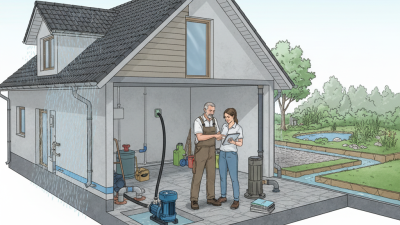
Top 10 Drainage Pump Types for Global Buyers
Choosing the right drainage pump is rarely a simple catalog decision. Global buyers must match pump design with water depth, debris size, discharge distance, power supply, and site conditions. A basement seepage problem needs a different solution from a muddy construction trench. A flooded plant room demands different reliability standards.
Pump engineer Igor J. Karassik is often credited with this practical reminder: “The pump is the heart of the system.” The comparison remains useful because every drainage system depends on stable flow, suitable pressure, and dependable operation. Yet pump selection involves more than the pump itself. Buyers should inspect motor protection, seal materials, corrosion resistance, maintenance access, noise, and replacement-part availability. Small details matter. A blocked intake can stop work within minutes.
This guide examines ten drainage pump types used across residential, commercial, municipal, agricultural, and industrial applications. It compares submersible pumps, sewage pumps, trash pumps, centrifugal models, diaphragm pumps, and other practical options. Each type has strengths, limits, and operating requirements. No ranking is perfect. A pump that performs well in clear rainwater may struggle with sand, rags, sludge, or chemical residue. That is why flow charts and advertised horsepower should not make the final decision alone. Real site conditions matter more. Buyers should verify specifications with qualified suppliers and experienced technicians before purchase.
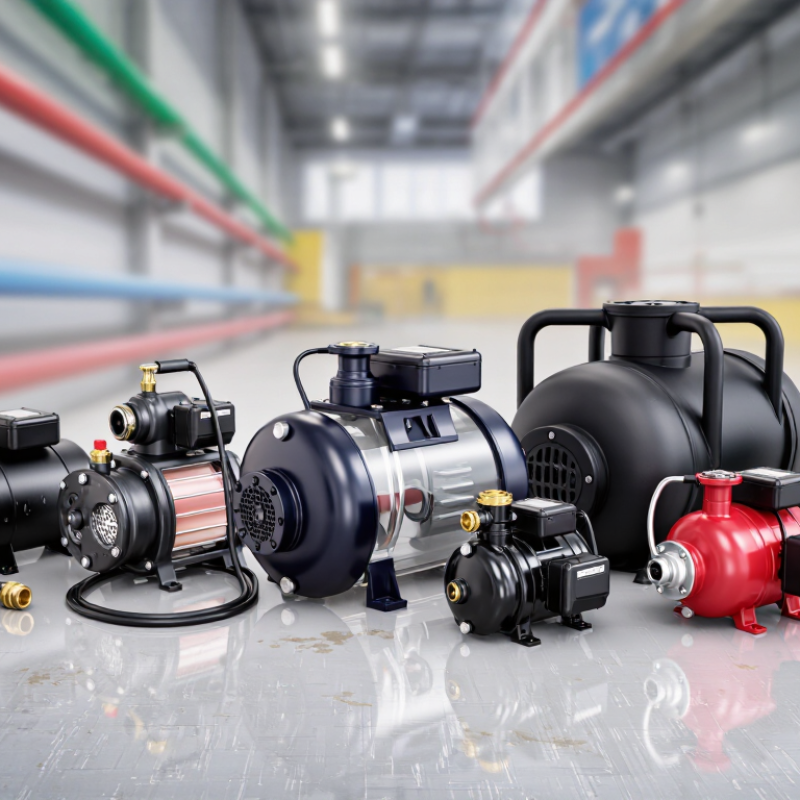
Drainage Pump Fundamentals: 0.5–500 kW, 5–100 m Head, and 10–100 mm Solids
Top 10 Drainage Pump Types for Global Buyers
Drainage Pump Fundamentals: 0.5–500 kW, 5–100 m Head, and 10–100 mm Solids
Drainage pumps handle water from construction pits, basements, mines, farms, and municipal sites. Common types include submersible, sewage, vortex, cutter, slurry, self-priming, axial-flow, mixed-flow, diaphragm, and high-head pumps. Power ratings can range from 0.5 to 500 kW. Required head usually falls between 5 and 100 meters. Solids passage may vary from 10 to 100 mm, depending on impeller design. A 100 mm passage helps reduce blockages, but it may lower pressure efficiency. This trade-off is often underestimated.
Pump selection should follow actual flow, head, liquid temperature, cable length, and solids content. For example, a muddy excavation with stones needs a rugged impeller and abrasion-resistant casing. A basement with clean seepage may need only a compact drainage pump. Field checks should include discharge pipe friction and changing water levels. A 30-meter rated head does not guarantee 30 meters at the outlet. Real systems lose capacity. Sometimes, the original estimate is simply wrong.
Tips: Measure solids before ordering. Check the pump curve, not only the motor power. Use a float switch for unstable water levels. Keep a spare seal kit and inspect cables regularly. When doubt remains, test the pump under site conditions. That small test can prevent an expensive mistake.
Top 10 Drainage Pump Types for Global Buyers
Drainage Pump Fundamentals: 0.5–500 kW, 5–100 m Head, and 10–100 mm Solids
The chart compares representative maximum solids-handling capacities for ten common drainage pump types. Typical pump selections span approximately 0.5–500 kW, 5–100 m head, and 10–100 mm solids passage. Actual performance varies by hydraulic design, liquid characteristics, installation conditions, and duty point.
Top 10 Drainage Pump Types Classified by Flow, Head, and Solids Capacity
Top 10 Drainage Pump Types for Global Buyers
Drainage pumps should be selected by flow, head, and solids capacity, not appearance. The UN World Water Development Report 2024 notes that agriculture uses about 70% of global freshwater withdrawals, making dependable drainage increasingly important. For low head and light solids, utility, dewatering, and submersible centrifugal pumps are practical choices. Vortex and open-impeller pumps handle moderate solids with reduced clogging risk. Axial-flow pumps deliver very high flow at low head, while mixed-flow pumps suit medium head and large drainage channels. Performance must be checked against ISO 9906 testing principles.
Higher head or difficult solids require different designs. Trash pumps move fibrous debris and stones through wider passages. Sewage pumps handle suspended solids in collection systems. Cutter pumps reduce stringy materials before discharge, while grinder pumps create finer particles but may consume more power. Diaphragm pumps tolerate air, sludge, and intermittent operation, although their flow is often lower. Hydraulic Institute guidance stresses that operating near the rated duty point improves efficiency and service life. Yet real sites are rarely clean. A pump rated for 50-millimeter solids may still clog when rags twist around the impeller. Buyers should verify actual solids shape, density, suction conditions, discharge length, and seasonal water levels. That detail is easy to miss.
| No. | Drainage Pump Type | Typical Flow Range (m³/h) |
Typical Head Range (m) |
Typical Solids Passage (mm) |
Main Operating Principle | Typical Drainage Applications | Selection Profile |
|---|---|---|---|---|---|---|---|
| 1 | Submersible Drainage Pump | 5–500 | 5–80 | 5–20 | Motor and pump are installed below the water level, allowing direct pumping without external priming. | Basements, construction pits, utility vaults, flooded areas, and general site dewatering. | Versatile choice for clean water, lightly contaminated water, and temporary dewatering. |
| 2 | Submersible Sewage Non-Clog Pump | 10–1,000 | 5–70 | 40–100 | Uses a wide-passage impeller and casing designed to reduce blockage from fibrous and suspended solids. | Wastewater sumps, sewage lifting stations, municipal drainage, and industrial effluent systems. | Suitable where wastewater contains rags, soft solids, or larger suspended particles. |
| 3 | Vortex Impeller Pump | 5–600 | 5–65 | 25–100 | Creates a recessed vortex that keeps many solids away from direct contact with the impeller. | Dirty water, sewage, sludge-containing drainage, and applications requiring improved clog resistance. | Favors solids handling and reduced clogging, although hydraulic efficiency is generally lower than closed-impeller designs. |
| 4 | Cutter or Grinder Pump | 2–150 | 20–120 | 3–10 after cutting | A rotating cutter or grinder breaks fibrous materials and soft solids into smaller particles before discharge. | Pressurized sewage, long discharge pipelines, small-diameter force mains, and difficult wastewater lift systems. | High-head option for stringy solids; requires attention to cutter wear and abrasive content. |
| 5 | Trash Pump | 20–2,500 | 10–90 | 25–100 | Surface-mounted centrifugal pump with a large internal passage and removable casing for field cleaning. | Flood control, construction drainage, agricultural canals, stormwater, and water containing leaves or gravel. | High-flow solution for solids-laden water; many models use a separate priming arrangement. |
| 6 | Diaphragm Pump | 1–250 | 5–80 | 10–75 | A flexible diaphragm displaces liquid while check valves control suction and discharge. | Mud, sludge, abrasive water, intermittent dewatering, and locations without dependable electric power. | Self-priming and tolerant of air and solids; flow is pulsating and usually lower than centrifugal pumps. |
| 7 | Self-Priming Centrifugal Pump | 20–1,500 | 10–100 | 15–75 | Surface-mounted centrifugal design that automatically evacuates air from the suction line during startup. | Remote construction sites, stormwater transfer, irrigation drainage, and applications requiring easy access for maintenance. | Good for above-ground installation and frequent relocation; suction lift and priming limits must be checked. |
| 8 | Axial-Flow Pump | 500–20,000 | 1–15 | 10–50 | Propeller-type impeller moves water mainly parallel to the shaft, producing very high flow at low head. | Flood drainage, irrigation channels, stormwater stations, aquaculture, and large-volume water transfer. | Best for large flow and short discharge distance; unsuitable for high-pressure drainage duties. |
| 9 | Mixed-Flow Pump | 200–10,000 | 5–40 | 10–40 | Combines axial and radial flow characteristics to provide higher head than an axial-flow pump with substantial capacity. | Large drainage stations, flood-control infrastructure, irrigation, cooling-water systems, and water transfer. | Balanced solution for medium head and high flow where axial-flow capacity alone is insufficient. |
| 10 | Wellpoint Dewatering Pump | 20–500 | 20–80 | Usually <5 | Vacuum-assisted pumping system removes groundwater collected through closely spaced wellpoints. | Excavations, trenches, foundations, underground utilities, and sites with shallow groundwater tables. | Designed for groundwater control rather than heavy solids; wellpoint spacing and soil permeability are critical. |
Engineering note: The flow, head, and solids-passage figures are typical selection ranges for general equipment comparison. Actual performance depends on pump size, impeller design, motor speed, liquid viscosity, solids shape, pipe friction, installation conditions, and manufacturer test standards.
Submersible and Sewage Pumps: 5–100 m Head and 10–100 mm Solids Handling
Top 10 Drainage Pump Types for Global Buyers
Selecting drainage pumps requires more than comparing motor power. Submersible, vortex, cutter, grinder, dewatering, and sewage pumps serve different site conditions. A pump rated for 5–100 m head may perform poorly when friction losses or rising water levels are underestimated. Solids handling also matters. Clear-passage designs can manage 10–100 mm solids, but actual performance depends on shape, fiber content, and inlet geometry. The U.S. EPA’s Wastewater Technology Fact Sheet on pumping systems highlights energy, clogging, and maintenance as key lifecycle concerns. That matches field experience: a slightly oversized impeller may reduce blockages, yet it can increase energy use.
The 2024 United Nations World Water Development Report states that agriculture accounts for roughly 70% of global freshwater withdrawals. Reliable drainage supports farms, construction sites, flood-prone buildings, and municipal networks. For sewage duty, vortex pumps usually tolerate irregular solids better, while cutter and grinder pumps suit smaller force mains. However, cutting mechanisms are not magic. Wipes, ropes, and abrasive grit can still create failures. Buyers should verify the duty point, starting current, insulation class, seal arrangement, and local service capacity. Some specifications look impressive but omit tested solids-passage data. That deserves skepticism.
Tips: Request a pump curve at the actual flow rate, not only the maximum head. Confirm whether 10–100 mm means spherical solids or fibrous waste. Check corrosion protection for salty or chemically aggressive water. Leave safe access for lifting and cleaning. A trial installation is often wiser than a perfect spreadsheet.
Diaphragm, Vortex, and Trash Pumps: 5–2,000 L/min for Difficult Fluids
For global buyers, drainage pumps must handle more than clean water. Diaphragm, vortex, and trash pumps cover difficult fluids from 5 to 2,000 L/min. Diaphragm pumps suit abrasive sludge and intermittent dewatering. Their air-driven design can tolerate dry running better than many centrifugal units. Vortex pumps reduce clogging when solids move through turbulent flow. Trash pumps handle leaves, stones, and suspended debris. Field conditions remain unpredictable.
The U.S. Environmental Protection Agency’s 2022 Clean Watersheds Needs Survey estimated $630.1 billion in wastewater infrastructure needs through 2041. This pressure makes dependable drainage equipment increasingly important. Buyers should compare solids passage, suction lift, head, duty cycle, and corrosion resistance. Flow rate alone can mislead. A 2,000 L/min pump may fail quickly if its inlet is undersized or its impeller cannot pass debris. That mistake is common.
Tips: Match the pump to the fluid, not only the project label. Measure actual lift, hose length, and solids size before ordering. For abrasive sludge, inspect diaphragm materials and replaceable wear parts. For stormwater, check vortex clearance and trash-pump priming behavior. ISO 9906 performance testing can support more reliable hydraulic comparisons, although field results may differ. Keep a small margin for friction losses. Too much margin wastes energy. Too little stops work.η
Global Buyer Standards: ISO 9906, IEC 60335-2-41, IP68, CE, UL, and 50/60 Hz
Top 10 Drainage Pump Types for Global Buyers
Global Buyer Standards: ISO 9906, IEC 60335-2-41, IP68, CE, UL, and 50/60 Hz
Selecting among submersible, sewage, vortex, cutter, dewatering, and mixed-flow pumps requires more than flow-rate comparisons. ISO 9906 defines hydraulic performance testing, including flow, head, power, and efficiency tolerances. Buyers should request test curves and actual acceptance results, not catalogue estimates. Field inspections often find avoidable losses from undersized discharge pipes, excessive bends, or incorrect impeller clearance.
Safety compliance also changes the shortlist. IEC 60335-2-41 addresses household and similar-use pump safety, including electrical protection and abnormal operation. IP68 under IEC 60529 indicates continuous immersion conditions, but the specified depth and duration still matter. CE marking confirms applicable European conformity requirements; it does not guarantee superior hydraulic efficiency. UL evaluation may support acceptance in North American projects, where local installation rules remain important. Paper is not performance.
Frequency compatibility is easily overlooked. A 50 Hz motor can deliver different speed, head, and power than a 60 Hz version. Confirm voltage, phase, starting method, and motor frequency before ordering ten pump types in one project. The IEA reports that electric motor systems consume about 53% of global electricity, making efficiency a serious operating-cost issue. The UN World Water Development Report 2024 also notes agriculture accounts for roughly 70% of freshwater withdrawals. Drainage equipment therefore needs reliable duty selection, not only a compliance label. Mistakes still happen. Witness testing and site commissioning deserve budget.
Related Posts
-
How to Choose the Right Drainage Pump for Your Home Needs
-
What is a drainage pump and how does it work?
-
2026 How to Choose the Right Drainage Pump for Your Needs?
-

10 Sump Pump Drainage Tips for Global Buyers
-
Top 10 Drainage Pumps in China for Efficient Water Removal?
-
How to Choose the Best Basement Waterproofing Products?