China Top 10 Portable Car Charging Suppliers
China’s portable charging industry has expanded beyond simple emergency power banks. It now includes compact EV chargers, battery-assisted units, and adaptable roadside charging equipment. This guide, “China Top 10 Portable Car Charging Suppliers,” introduces manufacturers that serve different vehicle, fleet, and outdoor charging needs.
The evaluation focuses on practical evidence. We consider product range, charging output, connector compatibility, battery safety, weather resistance, and after-sales support. Factory experience also matters. A supplier may present impressive specifications, yet performance depends on testing, components, and production consistency. Clear documentation is essential.
Real use reveals important details. A unit should fit inside a vehicle without becoming difficult to handle. Its cable should reach the charging port without excessive tension. A readable display helps during nighttime roadside use. Overheat protection, current control, and reliable insulation deserve close attention. These features affect safety and everyday confidence.
No ranking is perfectly permanent. That limitation matters. Supplier capabilities, certifications, prices, and delivery terms can change during the purchasing process. Buyers should confirm current test reports, warranty conditions, sample quality, and communication standards directly with each company. Independent inspection may also be sensible for larger orders.
The selected suppliers are presented as potential partners, not automatic choices. Their suitability depends on vehicle models, charging environments, target markets, and budget. Portable Car Charging equipment can be valuable, but only when its technical claims match real operating conditions. This introduction provides a practical starting point for closer comparison and more informed sourcing decisions.
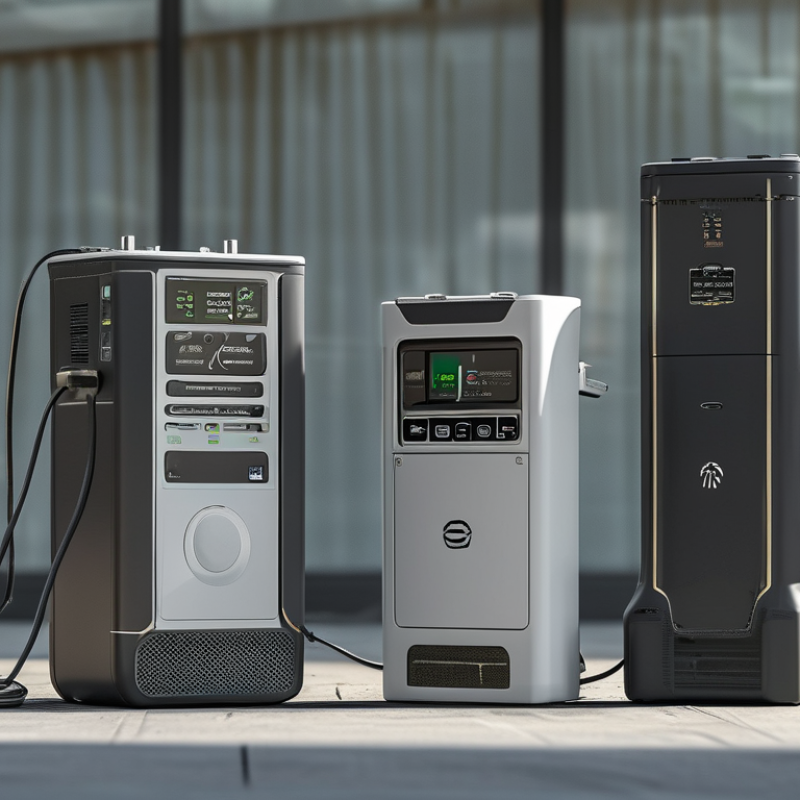
Portable Car Chargers in China: 2.2–22 kW Power Classes and GB/T 20234.2
China’s portable car-charging market is expanding with electric-vehicle ownership. The IEA Global EV Outlook 2024 reported over 8 million electric-car sales in China during 2023. This growth supports demand for compact charging equipment, especially for apartments, workshops, and roadside use.
Power classes vary widely. A 2.2 kW unit usually works from a 10-amp household circuit. A 3.5 kW model can suit 16-amp outlets, while 7 kW equipment commonly uses 32-amp single-phase power. Higher-output 11 kW and 22 kW chargers normally require three-phase supply. Charging speed depends on the vehicle’s onboard charger, not only the portable unit. That detail is often overlooked.
GB/T 20234.2 defines China’s AC conductive charging connector and interface requirements. It helps suppliers control pin layout, electrical contact, and connection safety. However, the standard alone does not prove every portable charger is equally reliable. Buyers should examine insulation protection, temperature monitoring, residual-current protection, cable durability, and enclosure ratings. The China Electric Vehicle Charging Infrastructure Promotion Alliance reported continued rapid growth in public charging infrastructure through 2024, yet home charging conditions remain uneven. A 22 kW charger may sound impressive. In practice, many homes cannot support it. Power quality, socket heating, and installation limits need field verification. Industry reports provide direction, but actual site testing still matters.
China’s Top 10 Suppliers Ranked by Output, Safety Certifications, and IP Rating
China Top 10 Portable Car Charging Suppliers
China’s portable car charging sector has expanded with demand for roadside flexibility. The top ten suppliers should be judged by more than factory size. Verified monthly output shows whether a supplier can maintain stable delivery during peak seasons. However, published capacity figures may include planned production, not actual shipments. That difference deserves careful review.
Safety certification is equally important. Buyers should request current certificates, test reports, and factory quality records. Relevant evidence may include CE, RoHS, IEC-based testing, and battery transport documentation, depending on the product design and sales market. Certification scope matters. A certificate for one model cannot automatically cover every charger. IP ratings also need close attention. An IP65 enclosure can resist dust and water jets, but it is not designed for submersion. Suppliers with documented sealing tests and traceable production controls deserve stronger consideration.
Tips: Ask for recent output records, sample inspection results, and the exact IP test report. Check cable strain relief, plug temperature, display accuracy, and emergency shutoff behavior. Test units in cold mornings and dusty parking areas. Real use can expose weaknesses that brochures hide. No ranking is perfect. Shipment data, certification updates, and supplier audits should be reviewed again before purchasing.
Portable EV Charger Technology: 16A–32A Current, 220V Input, and IEC 61851
China’s top portable car charging suppliers increasingly focus on flexible AC charging for apartment parking, workshops, and roadside use. The practical range is usually 16A to 32A, with a 220V single-phase input. At 16A, charging is gentler on older circuits. At 32A, charging speeds improve, but the socket, cable, and breaker must support the load.
IEC 61851 is central to safe communication between the portable charger and an electric vehicle. It helps manage the charging control signal, connection status, and current limits. A reliable unit should also monitor temperature, leakage, overcurrent, and abnormal voltage. I check whether these protections operate continuously, not only during laboratory demonstrations. Small details matter. A warm plug can reveal poor contact or undersized wiring.
When comparing suppliers, request test records, wiring diagrams, enclosure ratings, and clear operating instructions. Look for adjustable current settings, such as 16A, 20A, 24A, and 32A. A screen showing voltage, current, temperature, and delivered energy is useful during installation checks. Cable flexibility matters in winter. So does strain relief near the control box and vehicle connector. Some products appear impressive but provide limited evidence for long-term heat resistance. That is a weakness worth questioning. A supplier should explain which parts are certified, which are tested internally, and which depend on the installation environment. Portable does not mean universally safe. The wall outlet still decides much of the real-world performance.
How to Evaluate China-Based Portable Charging Suppliers for Global Markets
China Top 10 Portable Car Charging Suppliers
How to Evaluate China-Based Portable Charging Suppliers for Global Markets
Choosing portable car charging suppliers requires more than comparing prices. Check factory experience, production capacity, and testing records. Ask whether the supplier builds units in-house or relies heavily on subcontractors. A clear answer matters. Request samples from different production batches. Compare charging speed, cable strength, screen accuracy, and heat control during repeated use. Small inconsistencies often reveal larger quality problems.
Global markets require careful compliance checks. Confirm product documents for your target regions, including electrical safety, electromagnetic compatibility, battery transport, and environmental requirements. Certificates should match the exact model, not a similar product. Review the test laboratory and report dates. Inspect battery cells, protection systems, waterproofing, and emergency shutoff features. A supplier should explain these details without avoiding technical questions. Factory audits, traceable serial numbers, and written warranty terms also support reliable sourcing.
Tips: Test samples in hot and cold conditions. Measure charging performance with real vehicles, not only laboratory equipment. Check packaging strength after simulated warehouse handling. Discuss spare parts, repair training, response times, and software updates before placing an order. Do not trust polished videos alone. I have seen attractive samples hide weak connectors and unclear after-sales support. A perfect spreadsheet is not enough. Leave room for independent inspection and honest reconsideration.
China Top 10 Portable Car Charging Suppliers: Global Market Evaluation Framework
This reference scoring model uses a 100-point procurement framework for comparing China-based portable car charging suppliers. Product safety and certification receive the highest weighting because international buyers commonly need documented compliance, reliable performance, and market-ready logistics. The percentages are evaluation weights, not performance claims about any individual supplier.
