China Top Battery Backup for Sump Pump Manufacturers?
Choosing the right battery back up for sump pump can protect basements when storms cut household power. China has many manufacturers, but their products differ greatly in design, testing, and after-sales support.
A reliable system should start within seconds of an outage. It should handle pump starting current, not only the listed running wattage. Look for sealed batteries, clear charging indicators, overload protection, and alarms that remain audible in a damp utility room. Battery capacity also matters. A small unit may run a pump briefly, while a larger system can support several hours during heavy rainfall.
Real-world evaluation requires more than reading factory brochures. Buyers should inspect test reports, warranty terms, production experience, and replacement battery availability. Ask whether the manufacturer performs load testing on complete systems, rather than testing isolated components. That distinction can reveal weaknesses.
Details matter.
Leading Chinese manufacturers often provide customized cabinets, remote monitoring, and different battery chemistries. However, a polished website does not prove dependable performance. Suppliers should explain discharge curves, recharge times, thermal management, and service procedures in plain language. Independent inspections and sample testing can reduce purchasing risks.
This guide compares China’s top battery backup for sump pump manufacturers through practical performance, manufacturing capability, certifications, customization, and customer support. It also considers installation conditions, including basement temperature, pump horsepower, discharge-pipe resistance, and expected outage length. No supplier is perfect. Even strong brands may have inconsistent service in distant markets, so buyers should verify every claim before placing a large order.
China’s Sump-Pump Backup Market: 12V/24V Systems and 1,000–2,000 GPH Output
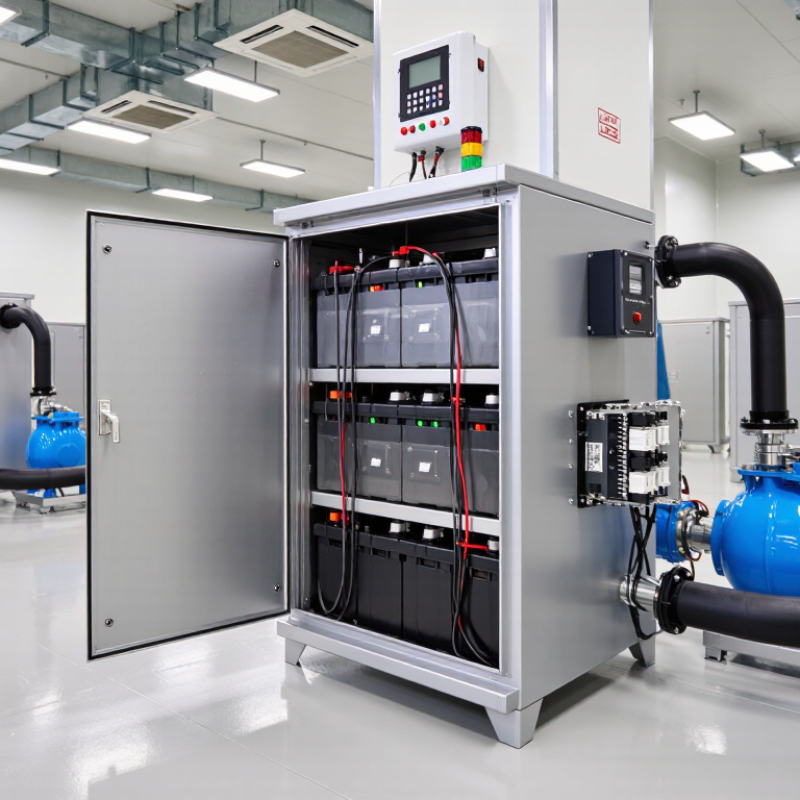
China’s sump-pump backup market increasingly centers on compact 12V and 24V systems for residential basements. A 12V unit suits many standard backup pumps and simplifies battery replacement. A 24V design can reduce current draw, helping longer cable runs and lowering connector heating. Output claims need careful reading. A system rated at 1,000–2,000 GPH may reach that figure near zero head height. Real discharge can fall sharply through narrow pipes, check valves, and vertical lifts. Measure the lift first. That small detail often changes the buying decision.
Reliable manufacturers should provide pump curves, tested runtime charts, charger specifications, and protection details. Look for overload, reverse-polarity, low-voltage, and float-switch safeguards. Battery compatibility matters too. Some controllers favor deep-cycle lead-acid batteries, while others support lithium packs with different charging limits. Ask for test data at 8, 10, and 12 feet of head, not only an attractive catalog number. In practical installations, a 1,500 GPH rating may be adequate, but heavy inflow or a weak primary pump can expose that assumption. I would not trust a single laboratory figure.
Tips: Match voltage carefully. Check actual head height. Confirm pipe diameter and runtime under load. Request sample testing before larger orders. Inspect charger heat, alarm volume, and float-switch response. A slightly imperfect prototype can reveal useful weaknesses. Do not hide them. Fixing small issues early is cheaper than handling flooded-basement complaints later.
China’s Sump-Pump Battery Backup Market: 12V/24V Systems and 1,000–2,000 GPH Output
Typical backup sump-pump specifications are grouped by system voltage and rated water output.
Output figures represent approximate gallons per hour under standard test conditions; actual performance varies with lift height, discharge-pipe size, battery condition, and installation design.
Core Battery Metrics: Ah Capacity, Runtime Formula, and Deep-Cycle Design
China Top Battery Backup for Sump Pump Manufacturers?
When evaluating battery backup sump pump manufacturers in China, start with measurable battery data. Amp-hour capacity shows how much charge a battery can store. A 12-volt, 100-Ah battery has 1,200 watt-hours nominally. However, usable energy is lower because discharge limits and inverter losses reduce it.
Use this practical runtime formula: Runtime equals Ah × voltage × usable percentage × efficiency ÷ pump watts. For example, a 100-Ah battery powering a 300-watt pump may provide about 2.9 hours at 80% usable capacity and 90% efficiency. Starting current can be higher than running current. Pump cycling also changes the result. The formula helps, but it is not perfect. Real basements are less predictable.
Tips: Ask manufacturers for independent capacity tests, cycle-life data, and low-temperature performance. Confirm whether the battery is truly deep-cycle designed. Deep-cycle batteries use stronger plates and controlled discharge characteristics. They tolerate repeated pumping better than ordinary starting batteries. Check protection against overcharge, deep discharge, heat, and short circuits. A responsible supplier should explain test conditions clearly, not only publish impressive numbers. Inspect terminals, casing quality, and backup alarms before installation. Small details matter.
Safety Benchmarks: UL 778 Pumps, IP Ratings, and Overcharge Protection
When evaluating China’s top battery backup sump pump manufacturers, safety evidence matters more than catalog claims. Ask for test reports, traceable component records, and clear installation guidance. A pump marketed for backup duty should show compliance with UL 778 requirements where applicable. This standard helps assess electric motor-operated water pumps, construction, wiring, and basic operating safety. Certification should match the actual pump model, not a similar product.
IP ratings also deserve close attention. An IP rating indicates protection against solid objects and water exposure. For example, a higher second digit may support resistance to splashing or temporary immersion. However, it does not make every enclosure floodproof. Check cable glands, battery terminals, ventilation openings, and mounting height. Overcharge protection is equally important. The charger should regulate voltage, prevent overheating, and stop charging when the battery reaches its safe limit. A visible fault alarm is useful during a storm.
Tips: Request sample test documents before placing an order. Confirm the battery chemistry and charging profile. Test the alarm and backup cycle under load. Do not rely on a high IP number alone. One easy mistake is ignoring installation conditions. Damp basements can expose weak seals quickly. I would also question vague claims such as “international safety approved.” The exact standard, test scope, and certificate holder should be identifiable. A careful manufacturer will accept technical questions, even when the answers reveal limitations.
How to Evaluate Chinese Manufacturers by Testing, Certifications, and MOQ
China Top Battery Backup for Sump Pump Manufacturers?
A reliable manufacturer must prove performance, not only provide attractive specifications. Request a production sample and test it with your actual pump, battery, and discharge pipe. Measure transfer time, runtime, recharge time, alarm accuracy, and operation during repeated power interruptions. A useful test includes a low-voltage battery condition and a blocked-float scenario. These details reveal weaknesses quickly.
Certification documents should match the exact model and battery chemistry. Check IEC 62133-2 for rechargeable battery safety, UN 38.3 transport testing, and destination-market requirements. For North American projects, ask whether the complete system follows applicable electrical and pump safety standards. Certificates need laboratory names, report numbers, dates, and traceable model numbers. BloombergNEF reported an average global battery-pack price of 115 dollars per kWh in 2024. Lower prices can help, but they do not prove longer runtime or safer charging. That distinction is easy to miss.
Tips:
Ask for a factory quality plan and three recent test records. Confirm cell supplier traceability. Request a video of load testing, but do not treat video evidence as independent verification. Discuss MOQ through a pilot order, perhaps 20 to 50 units, before committing to volume. A very low MOQ may hide higher unit costs or unstable component sourcing. I would also repeat testing after production approval. Specifications sometimes change quietly. That is not ideal, but it happens.
Supplier Comparison: Warranty, Lead Times, Customization, and After-Sales Support
When comparing top battery backup sump pump manufacturers, warranty terms deserve more attention than headline capacity.
The U.S. Energy Information Administration reported 5.5 average outage hours for American customers in 2022, including major events. A backup system must survive more than a brief test.
Look for a three-to-five-year warranty covering the charger, controller, and battery separately.
Some suppliers exclude labor, water damage, or replacement batteries. That detail can change ownership costs sharply. Ask for failure-rate records, not only marketing claims. The U.S. Department of Energy’s Energy Storage Grand Challenge emphasizes safety, reliability, and lifecycle cost as core storage criteria.
Lead times should be written into the quotation.
Standard units may ship within two weeks, while customized enclosures, alarm interfaces, or battery capacities can take six weeks or longer. Request production milestones and a remedy for delays. Customization is useful, but excessive modification may complicate testing and future repairs. I have seen attractive specifications become difficult service cases.
After-sales support is easier to judge with evidence.
Ask whether technicians respond within one business day, whether spare parts remain available, and whether remote diagnostics are included. NREL’s battery cost projections show continuing technology changes, so serviceability matters. A low purchase price may age badly. Supplier comparisons should record response times, replacement procedures, and actual installation guidance, not just promises.