
China Top Sump Pump Backup Battery Manufacturers
A flooded basement can turn a brief power outage into an expensive problem. For homeowners and installers, choosing a reliable sump pump back up battery is about more than comparing prices. Runtime, pump demand, charger compatibility, and maintenance requirements all affect whether the system works when needed.
China has manufacturers producing backup batteries, complete backup systems, and components for international buyers. Their capabilities vary. Some specialize in lead-acid batteries, while others offer lithium models or assemble pumps, chargers, and controls together. This guide examines how to assess manufacturers without treating a product listing as proof of performance. Look for clear specifications, including voltage, amp-hour capacity, cycle-life test conditions, charging limits, and operating temperature. Ask how the battery is tested and whether its dimensions and terminals fit your existing equipment.
Small details matter. A float switch may activate correctly, yet a mismatched battery can still limit backup time. Check the pump’s power draw and request realistic runtime estimates under stated conditions. Review warranty terms, quality certifications, sample availability, and after-sales support before placing an order. A catalog can look convincing; real performance is less tidy. That is why supplier comparisons should rely on verifiable documents and practical compatibility checks, not rankings alone. The following overview highlights leading Chinese manufacturers and the questions buyers can use to evaluate their products with care.
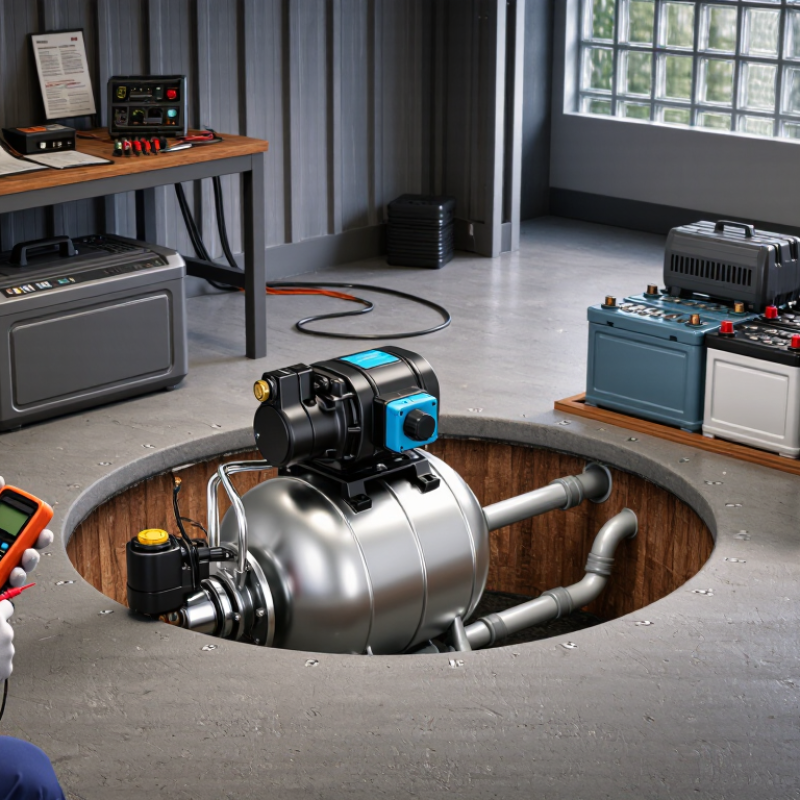
China’s Sump Pump Backup Battery Market: 12 V Systems and Leading Suppliers
China’s sump pump backup battery market centers on 12 V systems used during outages and heavy rain. Suppliers may offer batteries, chargers, and enclosures, but product ranges vary. A reliable selection starts with the pump’s voltage, running current, and startup demand. Check these figures against the battery and backup controller specifications.
Battery chemistry affects charging, maintenance, and usable capacity. Sealed lead-acid options are familiar and often straightforward to install. Lithium options can be lighter, but require compatible charging controls and clear temperature limits. Runtime depends on pump load, battery condition, and how often the pump cycles. Small details matter. Supplier documentation should state capacity, charging requirements, warranty terms, and test conditions. Claims without test details deserve a closer look.
Tips: Ask suppliers to confirm compatibility with your exact pump model and controller. Compare tested runtime, not just amp-hour ratings. Keep the battery away from standing water, and follow the specified charging and inspection schedule. I would not assume every 12 V battery is interchangeable; that shortcut can lead to poor backup performance.
China Top Sump Pump Backup Battery Manufacturers - China’s Sump Pump Backup Battery Market: 12 V Systems and Leading Suppliers
Market snapshot: Sump-pump backup systems commonly use a 12 V deep-cycle battery. The ranges below describe typical battery and supplier segments, not individual companies or market shares. Specifications vary by model; confirm compatibility with the backup system’s charger and manufacturer documentation.
| Supplier / Product Segment | Battery Technology | Nominal Voltage | Common Capacity Range | Typical Characteristics | Key Selection Considerations |
|---|---|---|---|---|---|
| Deep-cycle battery manufacturers | AGM lead-acid | 12 V | Commonly about 35–100 Ah | Sealed, valve-regulated construction; no routine water topping-up. Often used in residential backup systems. | Check the system’s approved battery type, case dimensions, terminal layout, and required capacity. |
| Marine and recreational-vehicle battery suppliers | Flooded deep-cycle lead-acid | 12 V | Commonly about 50–120 Ah | Rechargeable design for repeated discharge; generally requires upright installation and periodic maintenance. | Provide suitable ventilation and spill protection. Verify the backup system allows flooded batteries. |
| Sealed battery manufacturers | Gel lead-acid | 12 V | Commonly about 20–100 Ah | Sealed construction with a gel electrolyte; charging requirements differ from many AGM batteries. | Use only with a charger profile approved for gel batteries; excessive charging voltage can shorten service life. |
| Lithium battery manufacturers | Lithium iron phosphate (LiFePO₄) | 12.8 V nominal (four-cell configuration) | Commonly about 20–100 Ah | Typically lighter than lead-acid batteries of comparable capacity and usually includes a battery management system. | Confirm charger, low-temperature charging limits, discharge-current rating, and backup-system compatibility before use. |
| Standby and alarm battery suppliers | Small sealed lead-acid (SLA), commonly AGM | 12 V | Commonly about 7–18 Ah | Compact batteries are widely used in alarms and small standby equipment. | Often too small for sustained sump-pump operation; check the backup system’s minimum capacity and runtime requirements. |
| Backup-system and battery-pack integrators | System-matched battery configuration, usually 12 V lead-acid | Usually 12 V; some systems use multiple batteries | Set by system design and required runtime | Supplies or specifies batteries alongside the charger, pump, monitoring, and connection hardware. | Compare tested compatibility, protection features, replacement availability, and stated runtime conditions. |
Note: Amp-hour ratings are not a direct runtime guarantee. Actual backup duration depends on pump current draw, battery condition, discharge limits, cycling frequency, temperature, and system efficiency.
Related Posts
-
What Is the Best Battery Backup for a Sump Pump?
-
Best Sump Pump Backup Battery Options for Your Home?
-
How to Choose the Right Sump Pump Backup Battery for Your Home?
-
What Is the Best Backup Sump Pump System in 2026?
-
Best Sump Pump Backup Options for Reliable Flood Protection?
-
2026 How to Choose a Sump Pump with Battery Backup Options?