What Is the Best Battery Backup for a Sump Pump?
A flooded basement rarely gives much warning. Rain beats against the window, the sump pit fills, and the primary pump may stop when the power goes out. A battery back up for sump pump can keep water moving during an outage, but the right choice depends on your pump, basement, and likely outage length.
There is no source material here to verify a direct quotation from a named sump-pump expert, so I won’t invent one. That matters: a battery system is not a universal fix. A pump’s draw, battery capacity, recharge time, and discharge height all affect how long backup protection lasts. Check the pump’s specifications, not just the advertised runtime. Small details count.
This guide compares battery backup options by practical measures: pumping capacity, battery type, alarms, installation demands, and maintenance. It also explains when a dedicated backup pump may be more suitable than a battery-powered inverter system. Neither option removes the need to inspect the pit, test the equipment, and replace aging batteries. Even a dependable setup can fail if its battery is discharged or its float switch sticks. The best choice is the one sized for your actual risk—and tested before the next storm, not during it.
How Battery Backup Systems Protect Sump Pumps During Power Outages
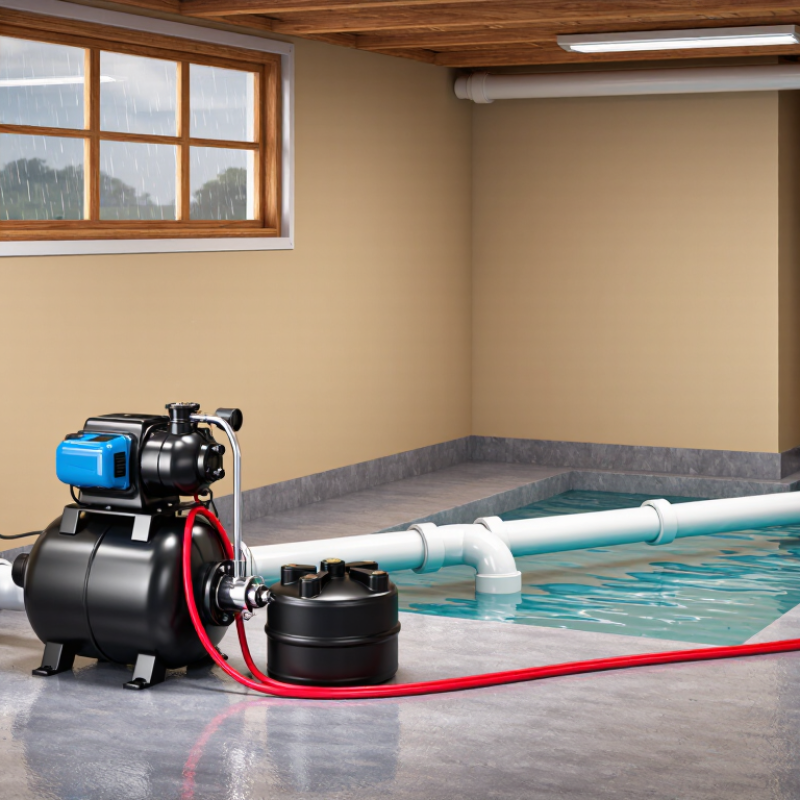
A sump pump can fail just when heavy rain raises groundwater and the power goes out. The U.S. Energy Information Administration’s 2022 reliability data recorded about 5.5 hours of electricity interruptions per customer, excluding major events. That is long enough for water to collect in a basement. A battery backup keeps a pump available when the home’s main supply stops.
In many systems, a charger keeps the battery ready, while a sensor or float switch activates the backup pump as water rises. An inverter-based setup converts battery power for an AC pump; other systems use a dedicated DC pump. Check the pump’s running wattage, startup demand, battery capacity, and expected runtime together. A label’s capacity alone can mislead. Real performance varies with battery age, temperature, and how often the pump cycles.
Consider a basement pit during a storm: the primary pump stops, water lifts the backup float, and the battery-powered unit begins pumping. Keep the battery and connections dry, and test the system regularly. The U.S. Department of Energy advises checking backup power equipment according to its manufacturer’s instructions; batteries also need replacement as they age. One detail homeowners may overlook: a backup cannot compensate for a blocked discharge pipe or a pump that is undersized for the water flow.
Battery Types, Capacity, and Runtime for Sump Pump Backup
Battery choice starts with compatibility, not chemistry alone. A deep-cycle lead-acid battery is widely used and can cost less, but it is heavy and needs ventilation. Lithium iron phosphate batteries are lighter and often deliver more usable energy over many cycles. They may cost more upfront. Check that the backup system’s charger supports the battery type, and confirm its voltage matches the pump setup. A mismatch can leave a full-looking battery unable to power the pump.
Capacity is usually listed in amp-hours or watt-hours. Watt-hours make comparisons easier: volts multiplied by amp-hours gives a rough energy estimate. A 12-volt, 100-amp-hour battery holds about 1,200 watt-hours before losses. The pump’s running wattage, inverter efficiency, and startup surge all affect usable runtime. A simple estimate is usable watt-hours divided by pump watts. It is only an estimate. Water inflow may make the pump cycle every few minutes, or run continuously during a storm.
Size the backup for the likely outage, then leave a margin. A basement pump running briefly every few minutes uses less energy than one fighting steady groundwater. Test the system by lifting the float switch and timing a real pumping cycle. Check the battery’s age and charge afterward. Small details matter. Estimates can be wrong, especially when the pump’s startup demand is missing from its label.
Key Features for Choosing a Sump Pump Battery Backup
A sump pump battery backup should match the pump’s actual power needs, not just its advertised runtime. Check the pump label for running watts and ask whether its motor draws extra power when starting. That surge matters. Compare the backup system’s output rating with both figures, and confirm that its inverter produces power suitable for the pump. A mismatch may cause shutdowns or unreliable operation during a storm.
Battery capacity, charging, and alerts also deserve attention. A larger capacity may provide more pumping time, but runtime changes with water inflow, pump age, and discharge conditions. Treat estimates as estimates. Look for a charger that can restore the battery between outages, plus clear alarms for low charge or system faults. Consider where the unit will sit: a damp, cramped pit area is a poor place for exposed connections. Follow the installation and ventilation instructions. Check the battery regularly, and test the system by simulating a power loss according to its manual. I’ve seen people focus on capacity and overlook testing; a backup that has never been checked is still an unknown.
Installation and Compatibility with Existing Sump Pumps
Compatibility starts with the pump’s nameplate, not the backup unit’s advertised runtime. Record the pump voltage, running watts, and starting surge; motor startup can briefly demand more power than normal operation. Some backup systems use an inverter to run an existing AC pump. Others add a separate DC pump, so the original pump remains unchanged. Fit is not automatic. Check the controller’s wiring instructions, float-switch arrangement, battery type, and discharge connection before installation.
Battery figures need context. NREL’s 2022 Annual Technology Baseline uses roughly 85% round-trip efficiency for utility-scale battery storage. That is a useful reference, not a sump-pump runtime guarantee. Pump cycling, lift height, startup current, battery age, and temperature all affect actual backup time. Compare battery capacity in watt-hours where possible; amp-hours alone can mislead when systems use different voltages. One detail is easy to miss: a backup pump needs a clear discharge path and a correctly placed check valve, or water may flow back into the pit. After installation, pour water into the pit and simulate a power loss. Listen for the alarm, watch the float rise, and confirm water exits outdoors. Test it wet. A dry button test proves less than people hope.
What Is the Best Battery Backup for a Sump Pump?
Estimated runtime by battery capacity assumes a 300 W running load, 80% usable battery capacity, and 85% inverter efficiency. Actual runtime varies with pump load, battery condition, temperature, and cycling; startup surges can also affect compatibility.
Before installing a backup system with an existing sump pump, confirm the backup unit’s voltage, supported battery type, continuous and surge ratings, and float-switch compatibility. Check the pump’s nameplate and the backup system’s specifications.
Maintenance and Replacement of Sump Pump Backup Batteries
A sump-pump backup battery can look fine while holding too little charge to run the pump. Check it every three months: look for a swollen case, corrosion, loose connections, or a low fluid level. Add distilled water only to serviceable flooded batteries, and never open a sealed battery. Keep terminals dry and clear. Small clues matter. Test the backup system according to its manual, ideally when the pit is not near its normal activation level. A brief test confirms operation, but it does not prove the battery can sustain the pump during a long outage.
IEEE Standard 1188 covers inspection and capacity testing for stationary valve-regulated lead-acid batteries; its principles support checking battery condition, not relying on age alone. Battery life varies with temperature, discharge depth, and charging quality, so follow the battery maker’s replacement interval and replace sooner if testing shows weak capacity. I would not trust a calendar reminder by itself. Record the installation date and test results on a label near the control unit. When replacing a lead-acid battery, arrange proper recycling: the U.S. Environmental Protection Agency reported a 99% recycling rate for lead-acid batteries in 2018. That figure is encouraging, but it does not make curbside disposal appropriate.
| Decision or maintenance area | Practical guidance | What to check |
|---|---|---|
| Choosing a battery | A deep-cycle battery designed for standby or sump-pump use is generally more suitable than a standard automotive starting battery. Confirm that its chemistry and electrical specifications are compatible with the backup pump and charger. | Check the backup system’s required voltage, permitted battery type, terminal arrangement, and maximum capacity before buying. |
| Battery chemistry | Flooded lead-acid and AGM batteries are common options. AGM batteries are sealed and do not require routine water top-ups. Flooded batteries can require periodic electrolyte checks. Lithium batteries should be used only when the backup system and charger explicitly support that chemistry. | Follow the battery and backup-system manuals. Do not substitute a battery chemistry based on voltage alone. |
| Capacity and runtime | Capacity is commonly stated in amp-hours (Ah), but a higher Ah rating does not by itself guarantee a particular runtime. Runtime depends on pump current, pumping head, water inflow, battery condition, temperature, and how often the pump cycles. | Use the system’s runtime guidance and pump specifications. For a critical installation, estimate demand using the expected water inflow and pumping conditions. |
| Routine inspection | Inspect the battery and connections regularly, such as monthly or at the interval specified by the manufacturer. Keep the area dry, clean, and ventilated as required for the battery type. | Look for corrosion, loose connections, swelling, leaks, damaged cables, unusual heat, or an alarm indicator. Address warning signs promptly. |
| Testing the backup system | Test the backup pump and alarm according to the system manual, and verify that the pump can discharge water safely. A visual check alone does not confirm that the pump will operate during an outage. | Use the manufacturer’s test procedure. Avoid running a pump dry or allowing the battery to discharge excessively during testing. |
| Battery-specific care | For a serviceable flooded battery, check electrolyte level as directed and add distilled water only when the manual specifies it. Do not open sealed AGM batteries or add water to them. | Wear appropriate protection when handling lead-acid batteries, and keep sparks and flames away. Follow the battery maker’s safety instructions. |
| Replacement timing | Many lead-acid backup batteries have a service life of roughly 3–5 years, but actual life varies with temperature, charging, use, and maintenance. Replace sooner if the battery fails a test or the system reports a fault. | Use the manufacturer’s replacement interval and test results rather than age alone. Record the installation date for reference. |
| Safe replacement and disposal | Disconnect and install batteries in the sequence specified by the backup-system manual. Recycle used lead-acid batteries through an appropriate battery-recycling or collection program. | Match the required voltage, chemistry, terminal type, and compatible capacity. Never place lead-acid batteries in household trash. |
| Best overall choice | The best battery is a compatible deep-cycle model with enough capacity for the site’s backup needs, supported by the system’s charger and maintained according to its manual. | No battery can guarantee a fixed runtime in every home; verify the backup system’s specifications and test it under safe conditions. |
Related Posts
-
China Top Battery Backup for Sump Pump Buying Guide
-
Top 10 Sump Pump Backup Battery Options for Buyers?
-
What Is the Best Backup Sump Pump System in 2026?
-
How to Choose the Right Sump Pump Backup Battery for Your Home?
-
China Top Battery Backup for Sump Pump Manufacturers?
-
Best Sump Pump Backup Options for Reliable Flood Protection?