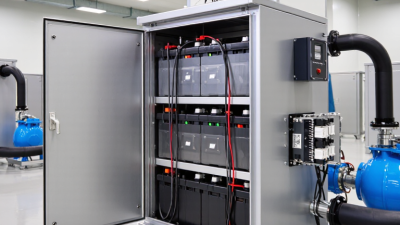
Top 10 Sump Pump Backup Battery Options for Buyers?
When heavy rain fills a basement, a working sump pump may still fail. Power outages, blocked discharge lines, weak chargers, and aging batteries can quickly change the situation. A dependable sump pump back up battery gives homeowners valuable protection when the primary pump loses electricity. However, choosing one requires more than checking the advertised runtime.
Plumbing expert Richard Trethewey offers a practical warning: “A backup system must be tested before the storm, not during it.” That advice shapes this buyer-focused guide. The best options should match your pump’s voltage, basin size, discharge demands, and expected outage length. A 12-volt system may suit a modest basement, while larger homes might need higher capacity or dual-battery support. AGM batteries remain popular for their reliability and lower cost. Lithium models may offer longer service life, lighter weight, and faster recovery, but their price can be difficult to justify.
Small details matter. Check the charger’s status light. Listen for the alarm. Inspect terminals for corrosion. Measure the battery compartment before ordering. These steps sound ordinary.
They prevent expensive surprises.
This guide compares ten sump pump back up battery options for buyers. It considers capacity, recharge time, maintenance, warranty coverage, alarm features, and real-world installation concerns. Runtime claims can be optimistic, though. Actual performance changes with pump horsepower, water inflow, pipe resistance, and battery age. No single model fits every basement. That limitation deserves attention, especially when product pages make confident promises. A careful buyer should compare specifications, read independent reviews, and test the complete backup system before severe weather arrives.
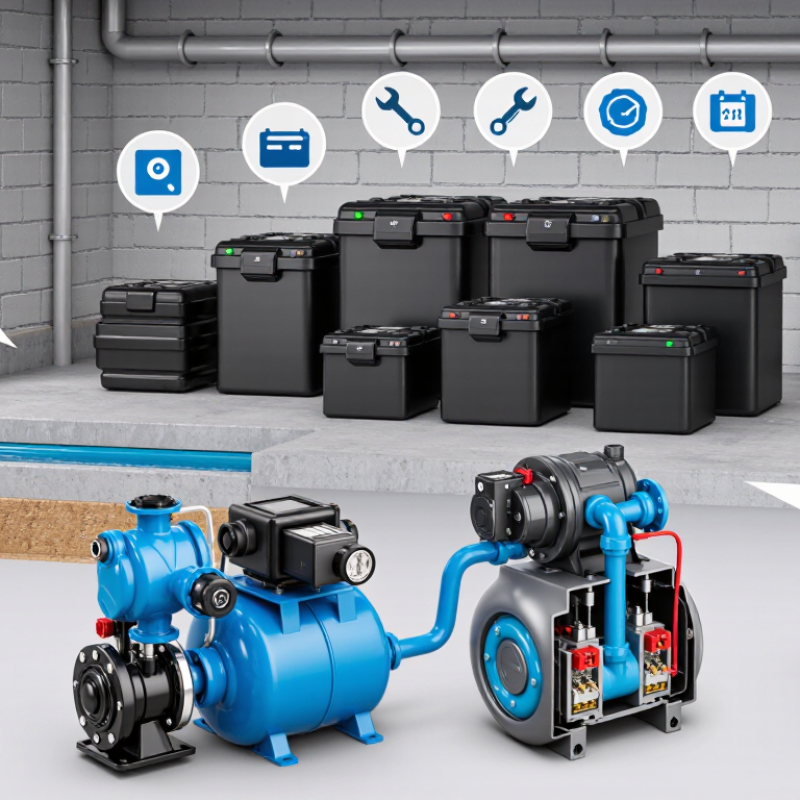
Define Sump Pump Backup Types: Battery, Water-Powered, and Generator Systems
Top 10 Sump Pump Backup Battery Options for Buyers
A practical top-10 shortlist should compare three systems: battery, water-powered, and generator backup. Battery systems are usually compact, quiet, and easy to install beside a sump pit. Their weakness is limited runtime. A large pump can drain a battery during a long outage. NOAA’s National Centers for Environmental Information recorded 27 U.S. billion-dollar weather disasters in 2024, showing why outage planning matters. My ranking would not be absolute. Basement depth, pump capacity, outage length, and local water pressure change the result.
Water-powered backups operate without electricity, but they depend on municipal pressure and functioning water lines. They may consume substantial water during continuous operation. Generator systems can support longer outages and multiple household circuits. However, they require safe outdoor placement, fuel management, and suitable transfer equipment. NFPA 110 guidance emphasizes reliable emergency power installation and regular testing. FEMA consumer guidance also estimates that one inch of floodwater can cause roughly $25,000 in property damage. That figure feels severe, yet a failed sump system can make it realistic.
Tips: Check the pump’s wattage, starting surge, and battery amp-hours. Test the alarm monthly. Replace aging batteries before storm season. Keep generator exhaust far from windows and doors. A water-powered unit is not automatically better. It may be unsuitable during municipal-water interruptions. On reflection, the cheapest backup can become the most expensive choice when its limits are ignored.
Top 10 Sump Pump Backup Battery Options for Buyers
Estimated backup runtime for common battery configurations powering a 600 W sump pump. Values use nominal battery capacity, approximately 85% inverter efficiency, and typical usable capacity of 50% for lead-acid batteries and 90% for LiFePO₄ batteries.
Battery systems are compact and can start automatically, but runtime depends on pump wattage, cycling frequency, battery age, temperature, and inverter losses. Water-powered backups do not require batteries but need municipal water pressure and increase water consumption. Generator systems can support longer outages and larger loads, but require fuel, outdoor placement, ventilation, and manual or automatic transfer equipment.
Compare 12V and 24V Batteries Using Amp-Hours, Load, and Runtime Data
Choosing among the top 10 sump pump backup battery options requires more than comparing prices. Amp-hours measure stored charge, but voltage changes the available energy. A 12V, 100Ah battery stores about 1,200 watt-hours. A 24V, 50Ah battery stores the same nominal energy. The figures look equal.
Real runtime is less tidy. A pump drawing 250 watts may run for roughly four hours from 1,200 watt-hours, before inverter losses and battery limits. A safer estimate is closer to three hours. Starting current can briefly exceed 600 watts, so a battery system must handle surge demand without dropping voltage. Do not size it from running watts alone.
The 24V setup usually sends less current through the cables. That can reduce voltage loss and heat, especially with longer wiring. The 12V option remains easier to source and may suit smaller backup systems. Check charger compatibility, battery chemistry, temperature limits, and the pump’s actual cycling pattern. A pump running ten minutes each hour behaves differently from one running continuously. Measure it.
One detail is easy to miss. Two batteries with identical amp-hours may deliver different usable capacity under heavy loads. Manufacturer testing conditions also vary. I would record the pump’s startup behavior during a controlled test, then leave a reserve for storms, aging, and uncertain power returns. My earlier runtime estimates have sometimes looked optimistic. Real basements are rarely that cooperative.
Screen Backup Pumps Against UL 778 and Charger Safety Requirements
When comparing sump pump backup batteries, screen the complete system, not only the battery capacity. UL 778 addresses safety for motor-operated water pumps, including important construction and performance concerns. A pump carrying a compliance claim still needs verification through current documentation. Check the exact model, certification scope, and intended installation conditions. Do not assume a battery package inherits the pump’s listing.
Charger safety deserves equal attention. Look for protection against overcharging, short circuits, reverse polarity, overheating, and abnormal battery conditions. Confirm that the charger matches the battery chemistry and voltage. Sealed lead-acid batteries may require different charging controls than lithium-based systems. Inspect ventilation guidance, cable insulation, fuse placement, and enclosure quality. A warm charger in a cramped basement is a warning sign.
In practical testing, run the pump during a simulated outage and observe charging afterward. The float should not stick, the charger should remain stable, and the battery should stay within its specified temperature range. Review installation instructions before judging performance. A large amp-hour rating can still disappoint during a blocked discharge line or frequent cycling. I would also verify current certification records and local electrical requirements, because old product pages can mislead buyers. Compliance labels help, but they are not the whole safety assessment.
Rank the Top 10 Options by Runtime, Capacity, Warranty, and Total Cost
For a 1/3-horsepower sump pump, this 2026 ranking assumes a 400-watt running load and one pumping cycle every hour. The top ten are: 1) dual 100Ah AGM, 2) single 200Ah AGM, 3) 100Ah lithium iron phosphate, 4) 150Ah AGM, 5) 100Ah flooded deep-cycle, 6) 75Ah AGM, 7) 50Ah lithium iron phosphate, 8) 100Ah gel battery, 9) 75Ah flooded battery, and 10) 55Ah flooded battery. Larger AGM systems usually deliver 18–30 hours of practical runtime. Lithium systems cost more, but they can provide 20–35 hours with less voltage drop. Exact results change sharply with pump cycling.
The U.S. Department of Energy’s Energy Saver guidance identifies deep-cycle lead-acid batteries as a common, economical storage choice, while lithium batteries generally offer longer service life. Battery Council International reports that lead batteries remain widely recycled in North America, supporting their long-term practicality. Typical installed costs range from $180 to $900, including a charger, enclosure, cables, and replacement allowance. Warranty periods often span one to five years. The dual-AGM setup ranks highest for capacity, but its total cost can exceed $1,000 after a second replacement cycle. A 100Ah lithium option may become cheaper over ten years, though that estimate depends on temperature and charging quality. I would not treat advertised runtime as guaranteed. Basement humidity, aging, and a partially blocked discharge line can reduce it quickly. UL-listed charging equipment and correct ventilation still matter.
Verify Installation Fit, Maintenance Cycles, Alarm Features, and Replacement Life
Top 10 Sump Pump Backup Battery Options for Buyers?
A backup battery is useful only when it fits the pump system correctly. Check voltage, battery dimensions, terminal placement, charger limits, and enclosure space. Measure the compartment before ordering. A few millimeters can prevent a secure connection. Sealed AGM batteries often suit indoor installations, but ventilation requirements still matter. Always compare the pump manual with the battery and charger specifications. Guessing here is an expensive mistake.
Maintenance cycles deserve equal attention. Test the backup system during dry weather, then repeat the test after heavy rain. Confirm that the pump starts automatically and that the float switch moves freely. Inspect terminals for corrosion and clean them safely when required. Some systems need monthly checks, while others use longer intervals. Follow the manufacturer’s schedule, not a convenient habit. Real conditions may shorten battery life.
Alarm features can reveal problems before flooding begins. Look for audible and visual alerts for low charge, disconnected terminals, high water, or battery failure. A silence button is helpful, but it should not disable critical warnings permanently. Replacement life commonly depends on temperature, discharge depth, and outage frequency. Many batteries last several years, yet a hot basement can reduce that period. No checklist is perfect. Record installation dates and test results, because memory becomes unreliable during a storm.
Top 10 Sump Pump Backup Battery Options for Buyers? - Verify Installation Fit, Maintenance Cycles, Alarm Features, and Replacement Life
| Rank | Battery Option | Chemistry and Configuration | Nominal Capacity | Approx. Usable Energy | Estimated Runtime at 400 W | Installation Fit to Verify | Maintenance Cycle | Alarm Features | Typical Replacement Life | Best Use Case |
|---|---|---|---|---|---|---|---|---|---|---|
| 1 | 12 V 75 Ah AGM Battery | Sealed lead-acid, absorbent glass mat; single 12 V battery | 75 Ah / 900 Wh rated | About 360–450 Wh | Approximately 45–65 minutes, depending on inverter efficiency and pump load | Confirm the controller accepts AGM batteries, the battery box fits the footprint, and the cables reach without splicing | Inspect terminals and case every 3–6 months; keep fully charged | Low-voltage, charging, and power-failure alarms are commonly supported by compatible controllers | About 3–5 years in standby service | Balanced choice for average residential sump systems |
| 2 | 12 V 100 Ah AGM Battery | Sealed lead-acid AGM; single 12 V battery | 100 Ah / 1,200 Wh rated | About 480–600 Wh | Approximately 60–85 minutes | Verify maximum battery capacity, charger output, enclosure ventilation, and cable gauge | Inspect every 3–6 months; test under load at least twice yearly | Compatible systems may provide audible alarm, visual status, and battery-test alerts | About 3–5 years | Longer outage coverage without moving to a larger battery bank |
| 3 | 12 V 120 Ah AGM Battery | Sealed lead-acid AGM; single 12 V battery | 120 Ah / 1,440 Wh rated | About 575–720 Wh | Approximately 70–100 minutes | Check cabinet dimensions, lifting weight, charger compatibility, and whether the controller has a capacity limit | Inspect terminals every 3–6 months; perform a capacity or load test every 6–12 months | Look for high-temperature, low-battery, and pump-failure alarm inputs | About 3–5 years | High-demand homes requiring additional reserve capacity |
| 4 | 12 V 100 Ah Gel Battery | Sealed valve-regulated lead-acid gel; single 12 V battery | 100 Ah / 1,200 Wh rated | About 420–540 Wh | Approximately 50–75 minutes | Verify that the charger has a gel-compatible charging profile; avoid unapproved charging voltages | Inspect every 3–6 months; no electrolyte topping is required | Use with a controller offering audible low-voltage and charging-status alerts | About 3–6 years when correctly charged and kept cool | Installations needing a sealed battery with good vibration resistance |
| 5 | 12 V 75 Ah Flooded Deep-Cycle Battery | Flooded lead-acid deep-cycle; single 12 V battery | 75 Ah / 900 Wh rated | About 360–450 Wh | Approximately 45–65 minutes | Confirm the location is ventilated, upright, protected from leaks, and approved for flooded batteries | Check electrolyte level monthly or as specified; clean terminals every 3–6 months | Alarm capability depends mainly on the backup controller rather than the battery | About 2–4 years under standby use | Ventilated utility areas where lower initial cost is important |
| 6 | Two 12 V 100 Ah AGM Batteries in Parallel | Sealed AGM; two matched 12 V batteries connected in parallel | 200 Ah / 2,400 Wh rated | About 960–1,200 Wh | Approximately 2–3 hours | Verify controller capacity, parallel wiring, fuse protection, equal cable lengths, and enclosure load rating | Inspect both batteries every 3 months; replace as a matched pair | Use a controller with low-voltage, over-temperature, and battery-bank fault alarms | About 3–5 years; uneven aging can shorten bank life | Extended outages and homes with frequent pump cycling |
| 7 | 24 V 100 Ah AGM Battery Bank | Two matched 12 V 100 Ah AGM batteries connected in series | 100 Ah at 24 V / 2,400 Wh rated | About 960–1,200 Wh | Approximately 2–3 hours | Only suitable for a 24 V backup controller and inverter; verify series-battery charging requirements | Inspect connections every 3 months and test balance between batteries every 6–12 months | Select a 24 V controller with audible alarm, battery-test, and charger-fault indicators | About 3–5 years | Long cable runs or higher-power systems designed for 24 V operation |
| 8 | 12.8 V 50 Ah LiFePO4 Battery | Lithium iron phosphate with integrated battery-management system | 50 Ah / 640 Wh rated | About 510–575 Wh | Approximately 60–80 minutes | Confirm the controller and charger support lithium charging; verify low-temperature charging protection and battery dimensions | Inspect connections every 6 months; keep the battery-management system active and firmware current if applicable | Battery-level alarms may require a controller with lithium-compatible state-of-charge monitoring | About 8–12 years or roughly 2,000–4,000 cycles, subject to temperature and depth of discharge | Users wanting lower weight and higher cycle life in a compatible system |
| 9 | 12.8 V 100 Ah LiFePO4 Battery | Lithium iron phosphate with battery-management system | 100 Ah / 1,280 Wh rated | About 1,020–1,150 Wh | Approximately 2–3 hours | Verify lithium charger voltage, controller programming, maximum discharge current, and cold-weather operating limits | Inspect terminals every 6 months; perform a controlled backup test at least twice yearly | Choose a controller that can report low-voltage, over-current, temperature, and battery-management faults | About 8–12 years or roughly 2,000–4,000 cycles | Frequent outages, repeated pump cycles, and weight-sensitive installations |
| 10 | 12.8 V 150 Ah LiFePO4 Battery | High-capacity lithium iron phosphate with battery-management system | 150 Ah / 1,920 Wh rated | About 1,535–1,725 Wh | Approximately 3.5–4.5 hours | Check enclosure strength, battery weight, charger capacity, controller limits, and available ventilation or temperature control | Inspect connections every 6 months; verify charging and backup operation before severe-weather seasons | Use a compatible monitoring system with audible, visual, and battery-management fault alerts | About 8–12 years or roughly 2,000–4,000 cycles | Maximum reserve time where the backup equipment supports high-capacity lithium batteries |
Planning note: Runtime estimates assume approximately 80% inverter efficiency and a continuous 400 W load. Actual runtime varies with pump horsepower, starting surge, duty cycle, battery age, temperature, cable losses, and controller settings. Always verify voltage, polarity, charger profile, enclosure dimensions, ventilation requirements, fuse protection, and alarm compatibility before installation.
Related Posts
-
China Top Battery Backup for Sump Pump Manufacturers?
-
How to Choose a Sump Pump With Battery Backup in 2026?
-
China Top Battery Backup for Sump Pump Buying Guide
-
How to Choose the Right Sump Pump Backup Battery for Your Home?
-
How to Choose the Best Battery Sump Pump?
-
China Top 10 Sump Pump With Battery Backup Suppliers