| Primary Purpose |
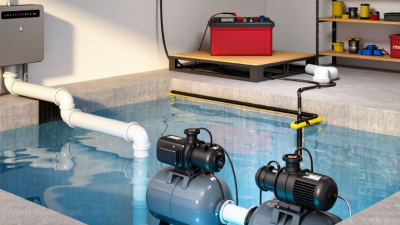
Emergency water removal during a power outage or failure of the primary sump pump. |
A backup pump helps reduce the risk of basement flooding when the main pump cannot operate. |
It is a secondary protection system, not a replacement for a correctly sized primary pump. |
| Power Source |
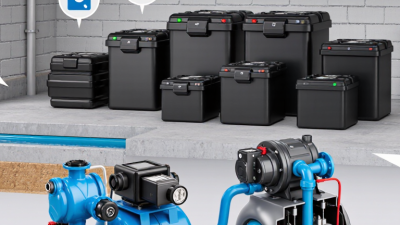
Rechargeable battery, commonly a 12-volt deep-cycle battery. |
The battery supplies direct-current power to the backup pump when household alternating-current power is unavailable. |
Battery type, capacity, age, temperature, and charging condition affect runtime. |
| Activation Method |
Automatic activation through a float switch, pressure sensor, or electronic water-level sensor. |
When the water level rises to a preset point, the control system starts the backup pump without manual intervention. |
The backup activation level should be set high enough to avoid unnecessary cycling but low enough to provide timely protection. |
| Normal Operating Mode |
Standby mode while utility power and the primary pump are functioning normally. |
The charger maintains the battery, while the backup pump remains inactive until its control system detects a need. |
Periodic inspection is still necessary because a standby system can fail without regular testing. |
| Typical Pump Capacity |
Approximately 1,000 to 2,500 gallons per hour at a 10-foot vertical lift, depending on pump design and plumbing. |
Pumping capacity decreases as the discharge height, pipe length, fittings, or back pressure increases. |
Always compare performance at the actual discharge height rather than relying only on the maximum advertised flow rate. |
| Discharge Pipe Size |
Many residential systems use a nominal 1.25-inch or 1.5-inch discharge line. |
The pipe carries water from the sump pit to an approved discharge location outside the building. |
The pipe diameter and layout must match the pump requirements to prevent excessive restriction and reduced flow. |
| Battery Runtime |
Often several hours of intermittent operation, but the actual time varies substantially. |
Runtime depends on battery amp-hour capacity, pump current draw, water inflow, cycling frequency, and discharge lift. |
Continuous heavy inflow can exhaust a battery much faster than occasional pump cycles. |
| Battery Charging |
An automatic charger typically keeps the battery at an appropriate charge level during normal utility operation. |
The charger restores energy after use and compensates for normal battery self-discharge. |
The charger should be installed in a dry, ventilated location and connected according to electrical safety requirements. |
| Low-Battery Warning |
Many systems provide audible and visual alerts for low charge, charging faults, or pump problems. |
Alerts notify occupants that backup protection may be reduced or unavailable. |
An alarm should be tested regularly and located where it can be heard or observed. |
| Check Valve |
A one-way valve is commonly installed in the discharge line. |
It helps prevent pumped water from flowing back into the sump pit after the pump stops. |
A malfunctioning or incorrectly installed valve can cause repeated cycling and lower system performance. |
| Water-Level Control |
Float-based controls are common; electronic sensors may also be used. |
The control detects rising water and signals the pump to start, then stops it after the water level falls. |
Controls must remain free of debris and have enough clearance to move or sense water accurately. |
| Installation Location |
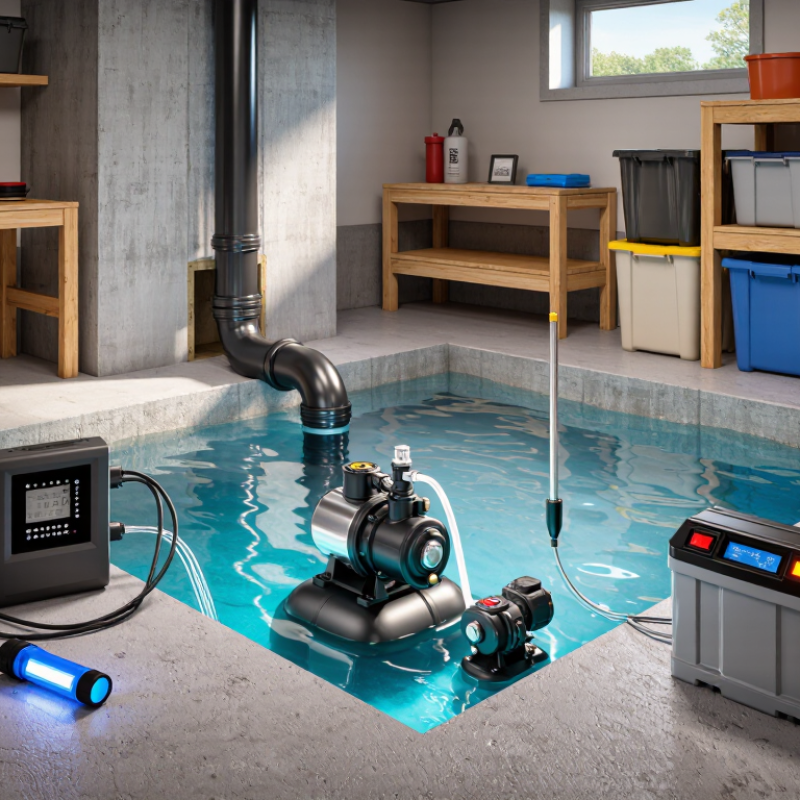
The pump is generally installed inside the sump pit alongside or above the primary pump. |
This arrangement allows the backup system to use the same pit while remaining available if the primary pump stops. |
The pit must provide sufficient space for both pumps, switches, piping, and maintenance access. |
| Common Trigger Conditions |
Power outage, tripped circuit breaker, primary pump failure, blocked discharge line, or unusually high water inflow. |
The backup system responds when water reaches its activation level, regardless of the original cause. |
A backup pump cannot correct structural water-entry problems or a blocked discharge route by itself. |
| Maintenance Frequency |
Visual checks are recommended several times a year, with battery and pump testing before wet seasons. |
Testing verifies that the pump starts, the alarm works, the charger operates, and water is discharged properly. |
Replace batteries according to their condition and manufacturer specifications rather than waiting for a complete failure. |
| Battery Service Life |
Commonly about 3 to 5 years for a properly maintained deep-cycle battery, although conditions vary. |
Repeated deep discharges, heat, overcharging, and long periods without maintenance can shorten battery life. |
Inspect for swelling, leakage, corrosion, damaged cables, or a noticeable loss of capacity. |
| Safety Requirements |
Electrical connections should be protected from moisture and installed in accordance with applicable local codes. |
Safe installation reduces the risk of electric shock, short circuits, fire, and equipment damage. |
Use a qualified professional when wiring, modifying plumbing, or installing equipment in areas exposed to water. |
| System Limitation |
Backup pumps have limited battery energy and may not handle extreme, continuous flooding indefinitely. |
The system provides additional time and protection but does not guarantee flood prevention under every condition. |
For high-risk properties, consider multiple layers of protection, such as a second backup power source and water alarms. |
| Overall Benefit |
Added Flood Protection |
Automatic battery-powered operation can keep water moving when the primary electrical supply is interrupted. |
Correct sizing, reliable discharge plumbing, a healthy battery, and routine testing are essential for dependable performance. |